
Reviewed · TOKYO TOURS
Small Town in the Big City: Tasting Tokyo’s Kichijoji
Kichijoji offers a satisfying way to see Tokyo through its food, from polished department-store counters to the everyday shops where locals buy dinner. This small-group walk centers on one neighborhood rather than trying to cover the whole city.
I like two things in particular: you get a broad taste of Japanese food in one outing, and the route includes a family-run rice-cracker maker alongside familiar favorites such as sushi and yakitori. Guide Phoebe was singled out for her enthusiasm and patience, qualities that matter when you’re learning what’s on the counter and how it fits into daily life.
The main consideration is the price: at $195 per person, this is a substantial food tour, and the supplied route details leave some uncertainty about how much time is spent in Inokashira Onshi Park. Book for the guided tasting and neighborhood perspective, not for a guaranteed park visit.
What makes this Kichijoji food walk worth considering
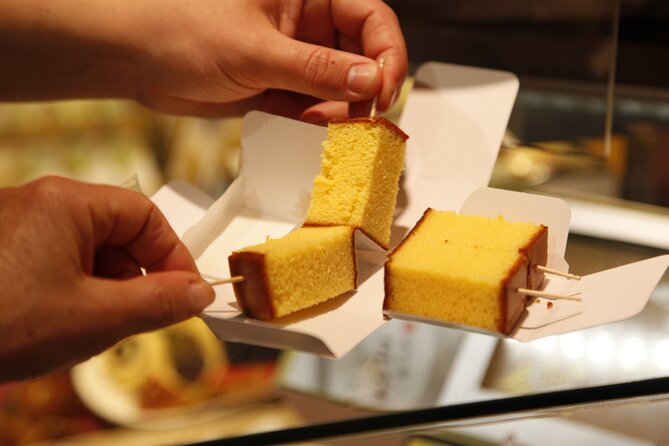
- A department-store food hall introduces Japanese food through carefully presented pickles, prized fruit, everyday snacks and sushi.
- Kichijoji’s shotengai shopping street puts the food in a local context, with stops for yakitori and octopus balls.
- A family senbei maker brings a close look at an artisanal business run by three generations.
- A small group of no more than six gives you more room to ask questions and follow the guide’s explanations.
- Lunch, snacks, coffee or tea, and bottled water are included in the tour price.
- The route details mention Inokashira Onshi Park, but do not explain what happens there, so confirm the park portion if it matters to you.
Kichijoji, one neighborhood instead of all of Tokyo
Tokyo is too large to understand in a single day, and this tour makes a sensible choice: stay in Kichijoji and explore what its food shops reveal about ordinary eating. The neighborhood is in Musashino, west of central Tokyo, and the walk begins and ends at Kichijōji Station.
That focus is useful if you have already seen the big-city landmarks or want a change from them. Rather than racing across town, you can compare different kinds of food businesses within one area: a department-store food hall, a shopping street, street-side stalls and a small family workshop.
The tour lasts about six hours, although the supplied stop timings account for only a portion of that total. The practical takeaway is to keep most of the day free. This is not a quick snack crawl to squeeze between other bookings.
More food and drink experiences in Tokyo:
- Tokyo: Shinjuku Food Tour (13 Dishes at 4 Local Eateries)
★ 5.0 · 6,603 reviews - Tokyo Tsukiji Fish Market Food and Culture Walking Tour
★ 5.0 · 3,184 reviews - Tokyo: Shinjuku Food Tour (15 Dishes and 4 Eateries)
★ 4.9 · 2,033 reviews
Starting at the depachika
The walk begins with a visit to a depachika, the food floor found in many Japanese department stores. It is a useful first stop because it puts a wide range of Japanese food in one place, from traditional items to newer trends.
You’ll pass pickles, carefully presented fruit and aisles of Japanese snacks before reaching a sushi bar described as a local favorite. The contrast is part of the appeal. A department-store food hall can look formal and immaculate, yet it is also a place where people shop for meals and treats.
For a first-time visitor, this is a good setting to learn what you’re looking at without having to choose everything alone. The guide can connect the displays to familiar basics of Japanese cooking and help you make sense of unfamiliar snacks. The food hall also gives you a glimpse of how much care goes into presentation, especially with items such as fruit.
The sushi stop sounds like one of the tour’s main tastings. A participant especially praised the sushi alongside the rice crackers later in the walk. The exact sushi selection is not specified, so treat this as a chance to sample what the tour provides rather than a promise of a particular fish or style.
Shopping street snacks and everyday food
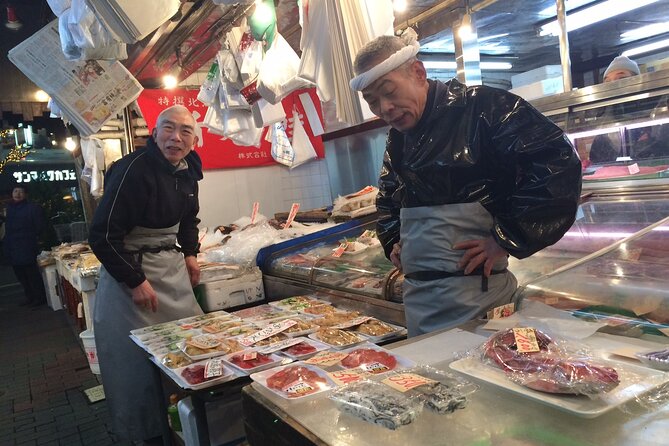
From the food hall, the walk moves along Kichijoji’s shotengai, a traditional shopping street where stores serve people’s daily needs. Here, the tour shifts from department-store polish to street-level food and errands.
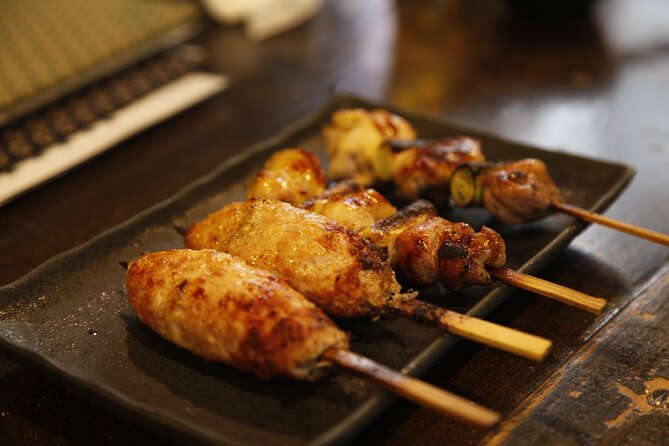
Yakitori, grilled chicken skewers, offers a familiar and practical introduction to Japanese cooking. The tour also includes takoyaki, or octopus balls, prepared and served street-side. These stops make food part of the neighborhood rather than a parade of restaurant reservations: you taste things where people buy them as part of a normal day.
The guide also explains some basics of Japanese cuisine as you go. That context is valuable because the point is not only to eat several snacks, but to understand how ingredients and dishes fit into everyday meals. If you have questions about a flavor, preparation or custom, a group capped at six should make it easier to ask than on a large bus tour.
Keep in mind that the exact number and size of portions are not specified. Lunch is included, but the tour does not spell out a menu or promise that every stop will suit every diet. If you have a food allergy or a strict dietary requirement, contact the operator before booking rather than assuming substitutions will be available.
Three generations making senbei
One of the most distinctive stops is a family-run senbei maker. Senbei are Japanese rice crackers, and this shop is described as a business run by three generations of one family.
That visit adds something a standard food crawl can miss. You’re not only tasting a finished snack; you’re encountering the people and small businesses behind a local food tradition. A participant praised an original rice cracker from a family-owned shop, making this a particularly good stop for anyone who likes to take home a food memory that is less predictable than a sushi lunch.
The specific production process and the chance to watch crackers being made are not described, so don’t count on a workshop or demonstration. What is clear is that the stop centers on an artisanal senbei maker and gives the tour a personal counterpoint to the larger department store and street-food stalls.
More tours and experiences in Tokyo:
- Mt Fuji and Hakone 1-Day Bus Tour Return by Bullet Train
★ 5.0 · 26,383 reviews - 1-Day Tokyo Bus Tour
★ 5.0 · 14,250 reviews - Tokyo: teamLab Planets TOKYO Digital Art Museum Entry Ticket
★ 4.6 · 9,779 reviews - Mt Fuji & Hakone Cruise, Drum Show Bullet Train 1 Day from Tokyo
★ 4.0 · 7,413 reviews
How Inokashira Onshi Park fits in
Inokashira Onshi Park appears as a named stop, but the accompanying route description focuses on the depachika, the shopping street, food tastings and the senbei maker. It does not say whether the tour takes a dedicated walk through the park, how long you might spend there, or what you would see.
That mismatch is worth noting if you’re choosing the tour partly for green space. The park may form part of the broader neighborhood route, but the available details do not support promising a park visit or specific activity there. Ask the operator before booking if time in the park is important to you.
The tour also mentions avant-garde taverns and lively street-food stands in its general description. Those suggest a wider range of Kichijoji’s food scene, but the specific sequence and tastings are not laid out in detail. Think of the listed foods and shops as a guide to the experience, not a fixed menu of every stop.
What $195 buys you
At $195 per person, this is not a budget lunch. The value depends on how much you want a guided introduction to Japanese food and how comfortable you are finding your own way around the city.
The price includes lunch, snacks, coffee or tea, and bottled water. You’re also paying for a six-hour guided experience with no more than six people, which allows the guide to explain the food and neighborhood as you move between stops. There is no private transportation included, though the meeting point is at Kichijōji Station, near public transit.
For comparison, the tour combines several kinds of food experience in a single outing: a department-store food hall, sushi, street snacks and a small family business. If you were to arrange all of those stops yourself, you might spend less, but you would need to plan the route, decide what to order and supply the context yourself.
I’d see the price as most worthwhile for a curious eater who wants a guided, small-group day and values the stories behind the food as much as the meal. If your priority is simply to fill up cheaply, or you prefer to pick every dish yourself, you may get better value by exploring independently.
Group size, timing and practical details
The maximum group size is six. That’s small enough for a more conversational walk, and it matters in food shops where a large group can crowd a counter. It also gives you a better chance to ask the guide about ingredients or customs as they come up.
The meeting point is Kichijōji Station, at 2 Chome-1 Kichijoji Minamicho, Musashino, Tokyo 180-0003. The activity ends back at the same meeting point, so you do not need to plan for a separate return location. A mobile ticket is provided, and confirmation is received at booking.
The tour is listed as suitable for most participants and near public transportation. No further accessibility details are provided, so check directly with the operator if you have mobility needs or require a particular pace.
It is booked, on average, 83 days ahead. That is a useful planning signal if you have fixed dates, especially since the group is limited to six. The tour requires good weather and a minimum number of participants. If it is canceled because of poor weather or because the minimum is not met, you are offered a different date or a full refund.
You can cancel for a full refund up to 24 hours before the start time. Changes or cancellations made later than that are not accepted for a refund, so keep the local start time in mind.
Who will enjoy this tour most
This walk suits food-minded visitors who want to see how a Tokyo neighborhood eats, not just tick off famous dishes. It is especially appealing if you enjoy trying unfamiliar snacks, want a guide to explain what you’re tasting, or like meeting small producers as part of a city visit.
The tour also works well for a day when you want variety without arranging multiple restaurant bookings. Sushi, yakitori, octopus balls and senbei give you a range of textures and settings, while the food hall and shopping street show two different sides of local food shopping.
It may be less suitable if you need a precise menu in advance, have strict dietary needs that have not been confirmed with the operator, or are mainly hoping for a park tour. The schedule is about six hours, and the details do not establish exactly how much walking or park time is involved.
Should you book the Kichijoji food tour?
Book it if you want a small-group introduction to Kichijoji’s food culture and are happy to pay for guidance, tastings and local context. The mix of sushi, yakitori, street food and a three-generation senbei business gives the day a more personal feel than a meal-focused tour alone.
Skip it if you want the lowest-cost way to eat in Tokyo, need a guaranteed park visit, or require a confirmed dietary menu. For the right eater, the strongest reason to go is the range: you move from an elegant food hall to a family-run cracker shop, with everyday street snacks in between.
FAQ
How long is the Kichijoji food tour?
The tour lasts approximately six hours.
Where does the tour begin and end?
It begins at Kichijōji Station in Musashino and ends back at the same meeting point.
What food and drinks are included?
Lunch, snacks, coffee or tea, and bottled water are included. Specific menu items are not guaranteed, though the route describes sushi, yakitori, octopus balls and senbei.
How many people can join?
The maximum group size is six participants.
Is transportation included?
Private transportation is not included. The meeting point is near public transportation.
Can I cancel for a refund?
You can cancel at least 24 hours before the experience starts for a full refund. Later cancellations are not refunded.
Freshly reviewed in Tokyo
- Tokyo: Toshimaya Sake Brewery Tour with Sake Tasting★ 5.0 · 6 reviews
- :Tokyo,Shibuya /Meiji Shrine tour in KIMONO/English-friendly★ 5.0 · 4 reviews
- Tokyo: Tour Privado por Tokio en español★ 4.3 · 4 reviews
- Tokyo:Tea ceremony experience at Komaba Warakuan★ 4.8 · 9 reviews
- :Tokyo,Shibuya/ Pro Photography in Kimono / English-Friendly★ 5.0 · 26 reviews
- Tokyo:Samurai Training : Swords, Bushido & Mental Discipline★ 5.0 · 6 reviews
- Tokyo:Mt Fuji & Hakone Day Tour with English Speaking Driver★ 5.0 · 26 reviews
- Tokyo:Nikko UNESCO World Heritage Sites Private 1-Day Tour★ 3.8 · 6 reviews
Tokyo Tours, compared.
Mt Fuji and Hakone 1-Day Bus Tour Return by Bullet Train
Read our review →
teamLab Planets TOKYO Digital Art Museum Entry Ticket
Read our review →
Mt Fuji & Hakone Cruise, Drum Show Bullet Train 1 Day from Tokyo
Read our review →
Shinjuku Food Tour (13 Dishes at 4 Local Eateries)
Read our review →
Tokyo Mt Fuji 5th St & Hakone Cruise Bus Tour w/Bullet Train
Read our review →
Flagship 2-Hours Official Street Go-Kart Tour – Tokyo Bay Shop
Read our review →
Browse the lists this tour appears in