Reviewed · TOKYO TOURS
Karate Experience with the Shotokan Karate-do Instructor
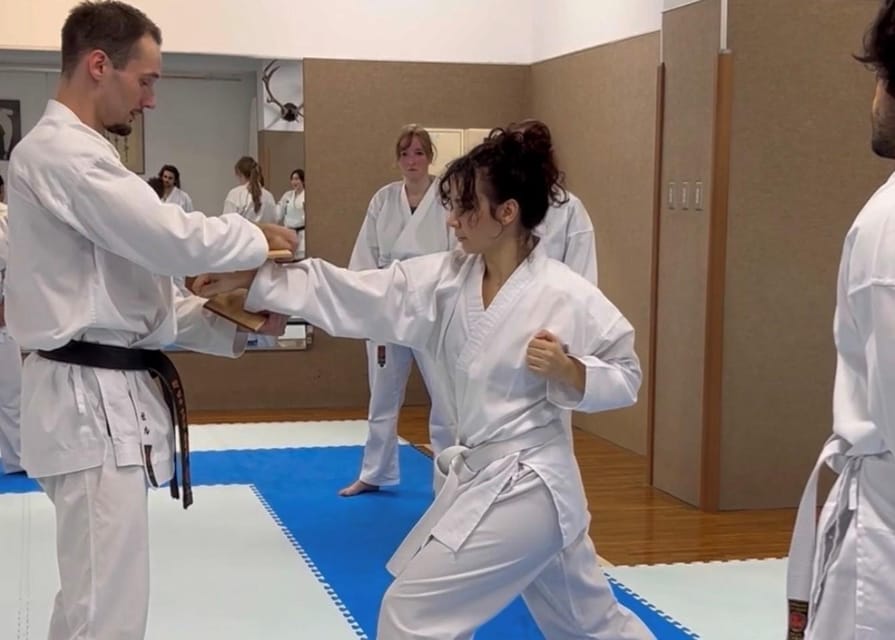
The most unusual part of this 90-minute experience is the address: you train at the Shotokan Karate-do International Federation headquarters, a dojo where world champions train and teach. You get hands-on instruction from a high-level karateka, not just a short martial arts demonstration staged for tourists.
I like two things in particular: the instructor can shape the session around your experience, and the class includes both practice and a demonstration, so you see karate from the inside and the outside. You can also try breaking a board, a memorable test of focus and technique.
The main consideration is the $220 per-person price for an hour and a half. It makes most sense if you value expert instruction and a rare chance to train in a respected dojo, rather than simply want a quick cultural activity.
- Train at SKIF headquarters: The session takes place in the organization’s own dojo, where world champions train and teach.
- Expect practical instruction: You’ll work on strikes, kicks, kata and pre-arranged kumite, with the session led in English.
- Tell the instructor your level: Share your karate background and what you want to practise in advance for a more tailored session.
- Try board breaking: The experience includes a chance to split a board, plus a demonstration by the instructor.
- Keep the group small: A maximum of 10 participants allows for a more personal class than a large group lesson.
- Arrive early and bring water: The dojo is a two-minute walk from Kugahara Station, and late arrivals do not get extra time.
Training at the SKIF headquarters dojo
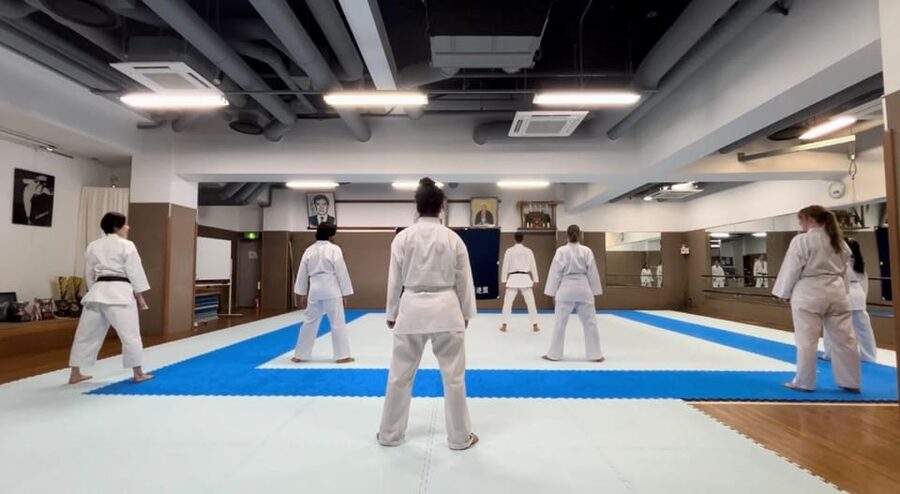
This is not a general-purpose martial arts class in a rented hall. The session is hosted by the Shotokan Karate-do International Federation, or SKIF, an established organization with an international presence. Its headquarters dojo gives the experience a clear sense of place: you are learning in the home base of a group whose instructors have competed at national and world level.
That setting matters most if you have practised karate before. You can ask about technique, terminology and the traditions behind the movements, and you may get a more satisfying lesson if the instructor knows your style and interests ahead of time. The organizers specifically invite experienced karateka to share their background and training preferences in advance.
Beginners have a good reason to come, too. The class is designed for inbound visitors and starts with an introduction to karate’s history and philosophy before moving to core movements. You don’t need to arrive knowing the difference between a kata and a kumite. The instructor’s job is to show you what to do and help you follow along.
The instructor is English-speaking, and the session is led by one of several accomplished teachers. Their competition records include SKIF World Championship gold medals in kumite, national titles in kata and kumite, and runner-up finishes in major events. Paul is one instructor who has led a session; the instructor assigned to your date may be someone else.
From karate’s principles to your first techniques
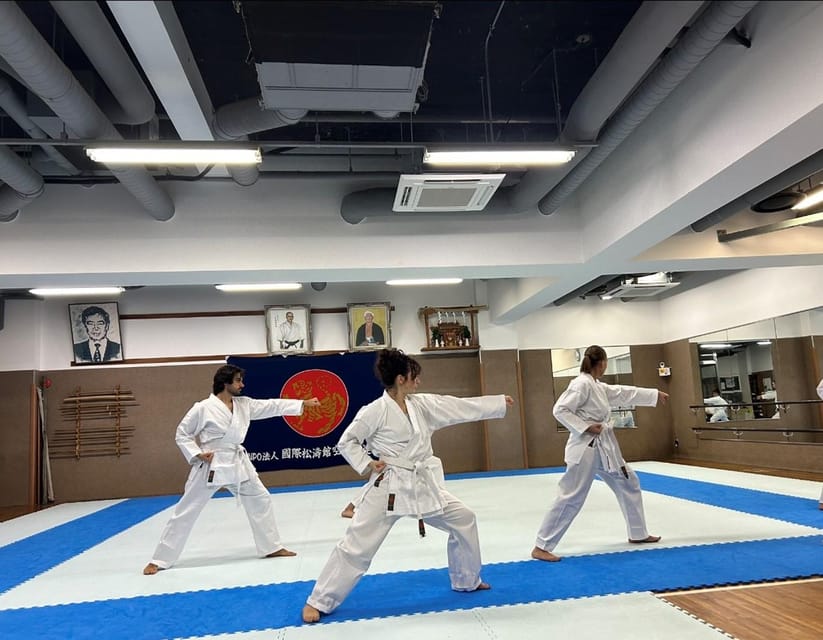
The 90 minutes begin with a short introduction to karate’s history and philosophy. This context helps explain why the class is more than a set of punches and kicks. Karate is taught as a traditional martial art, with attention to disciplined movement and the meaning behind its forms.
You then move into the physical basics. Expect to practise strikes and kicks, with the instructor demonstrating and correcting technique. For a complete beginner, this is a chance to learn how the movements are structured rather than simply mimic them at speed. If you already train, you can use the time to ask about details and focus on areas you have arranged with the instructor.
Kata comes next as a sequence of formal movements. You’ll be introduced to the idea of practising a pattern of techniques, rather than learning only isolated attacks. Kata gives you a way to connect posture, movement and control, though 90 minutes is an introduction, not enough time to master a form.
The session also covers pre-arranged kumite, a form of sparring with set movements. That structure makes it easier to understand timing and distance without the unpredictability of free sparring. It is a useful distinction for beginners, and a chance for experienced students to compare how the instructor approaches fundamentals.
More tours and experiences in Tokyo:
- Mt Fuji and Hakone 1-Day Bus Tour Return by Bullet Train
★ 5.0 · 26,383 reviews - 1-Day Tokyo Bus Tour
★ 5.0 · 14,250 reviews - Tokyo: teamLab Planets TOKYO Digital Art Museum Entry Ticket
★ 4.6 · 9,779 reviews
Board breaking and a live demonstration
The board-breaking opportunity is likely to be the most theatrical moment of the class. You get to try it yourself, with instruction, rather than just watch a demonstration. Treat it as a chance to apply focus and technique, not a test of brute strength. The activity does not specify the board material, the number of attempts or whether everyone is guaranteed to break one, so ask the instructor if those details matter to you.
You’ll also watch the instructor perform a demonstration. The teachers are accomplished competitors, and this gives you a close look at the speed and precision that can grow from years of training. It is a useful contrast with your own first attempts: you see the movements at a high level, then have time to ask questions and make sense of what you’ve practised.
The class ends with a friendly exchange and time for photos. That informal finish is a good moment to ask about a technique or Japanese term that caught your attention. If you are an experienced karateka, it is also a natural point to discuss how your style compares with Shotokan, though the amount of time available will depend on the group.
A small class with room to adjust
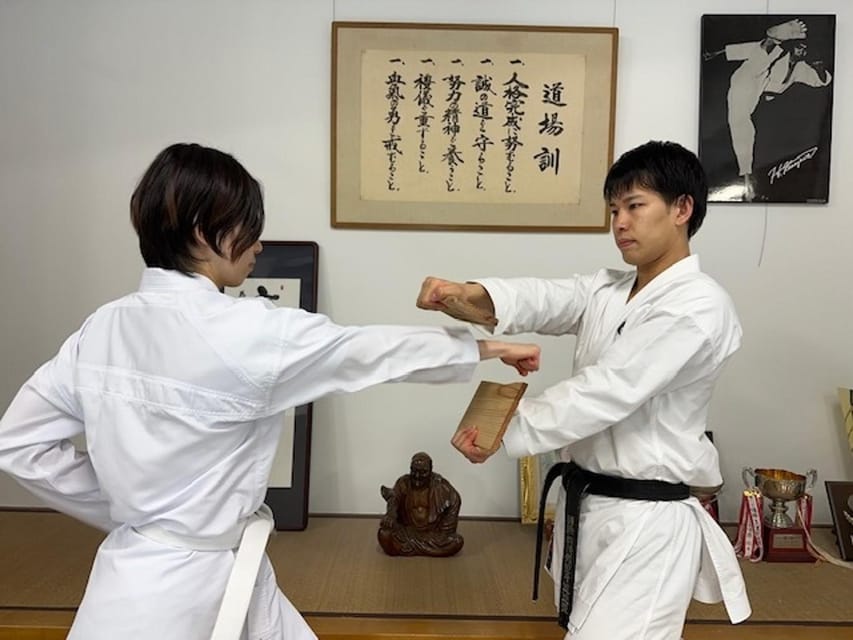
The group is limited to 10 people. That cap matters in a physical lesson: you are less likely to feel lost in a crowd, and the instructor has a better chance to see how you are doing. It also means the atmosphere may feel more like a shared class than a show put on for a large audience.
The program welcomes beginners and people with karate experience, but those are different needs. If you are new, you can focus on the basic movements and enjoy trying something unfamiliar. If you have trained for years, contact the provider beforehand with your style and the kind of practice you want. Don’t assume every session will automatically be a specialist lesson tailored to your rank or discipline.
There is one named instructor, Paul, associated with a particularly adaptable teaching approach: he has been described as explaining traditional karate, techniques and Japanese terminology in response to a participant’s interests. But the day’s teacher can be one of several instructors, so ask who is scheduled if working with a particular person is important to you.
Uniforms are available to rent, which keeps you from needing to pack a karate gi for one activity. Bring a towel and drinks; bottled water and towels are not included. Food, alcohol and drugs are not allowed, and smoking is prohibited.
Is $220 fair value for 90 minutes?
At $220 per person, this is an expensive short activity by ordinary class standards. The price is easier to justify if you see it as a private cultural encounter with a respected martial arts organization: you get an English-led introduction, practical coaching, the chance to try board breaking, a demonstration and a small group setting at SKIF headquarters.
It is less compelling if your main goal is to get a long workout, practise karate over several sessions or see a broad range of Japanese traditions. Ninety minutes is enough to get a feel for the art, but not to build substantial skill. You are paying for access to the dojo and the instructors’ expertise, not for a full course.
The value also depends on how much you participate. A beginner who is curious about karate can get a compact, memorable introduction. An experienced student who contacts the organizers beforehand may be able to steer the time toward their interests. If you arrive without sharing your background, the session may need to spend more time on common fundamentals.
Transportation to and from the dojo is not included, so include that in your total cost. The meeting point is a two-minute walk from Tokyu Ikegami Line Kugahara Station. If you are unsure of the route, contact the provider in advance and ask about being met at the station.
For a different side of the same trip:
- Mt Fuji & Hakone Cruise, Drum Show Bullet Train 1 Day from Tokyo
★ 4.0 · 7,413 reviews - Tokyo: Sumo Show Experience with Chicken Hot Pot and a Photo
★ 4.8 · 6,678 reviews - Tokyo: Shinjuku Food Tour (13 Dishes at 4 Local Eateries)
★ 5.0 · 6,603 reviews - Tokyo Mt Fuji 5th St & Hakone Cruise Bus Tour w/Bullet Train
★ 4.4 · 5,024 reviews
Getting there, arriving ready and knowing the limits
The dojo is close to Kugahara Station, but give yourself more time than the two-minute walk alone suggests. You must arrive at least 10 minutes before the start. Late arrival does not extend the session, and in a short class, losing even a little time can mean missing part of the introduction or warm-up.
Check the available start times when booking, since the schedule is not fixed in the information provided here. The experience lasts 90 minutes. Flexible booking is available with a reserve-now, pay-later option, and you can cancel up to 24 hours in advance for a full refund.
Children under 7 are not suitable for the activity. If you have a child under 7, or a child over 7 who would like to visit only rather than take part, contact the provider beforehand. The activity does not allow non-folding wheelchairs or electric wheelchairs, so check directly with the provider if access arrangements are important.
Who should book this karate session?
I’d consider this a strong choice for someone already interested in Japanese martial arts, especially a karateka who wants to compare their practice with Shotokan in a formal dojo. The chance to speak with a high-level instructor and see a demonstration adds substance beyond a one-off beginner class.
It also suits a curious first-timer who wants a structured, hands-on cultural activity and is comfortable with the price. The class offers enough variety to keep a novice engaged: background, basic techniques, kata, pre-arranged kumite and board breaking. You don’t need prior experience, but you should be ready to follow instruction and take part in physical practice.
I would skip it if you want a low-cost activity, a long training session or a guaranteed appointment with a specific instructor. For everyone else, the key is to set expectations: this is an expert-led introduction in a notable dojo, not a shortcut to karate proficiency. Share your experience in advance, arrive early, and bring water and a towel.
FAQ
Where does the karate experience take place?
It takes place at the Shotokan Karate-do International Federation headquarters dojo on Honshu. The meeting point is a two-minute walk from Tokyu Ikegami Line Kugahara Station.
How long is the session?
The experience lasts 90 minutes. It cannot be extended if you arrive late, so plan to arrive at least 10 minutes before the start.
Is the class suitable for beginners?
Yes. The program is open to beginners as well as people with karate experience and starts with an introduction to karate before covering fundamental techniques.
What will I learn or practise?
The session includes basic strikes and kicks, kata, pre-arranged kumite, and an introduction to karate’s history and philosophy. It also includes a demonstration and an opportunity to try board breaking.
Is instruction available in English?
Yes. English is the listed language for instruction.
Will I train with a specific instructor?
The session is led by one of several high-level instructors, so a particular instructor is not guaranteed. Paul is one instructor associated with the experience. Contact the provider if you want to ask about the instructor for your date.
What should I bring?
Bring a towel and drinks. Rental uniforms are available, and bottled water and towels are not included.
Can children take part?
Children under 7 are not suitable for the activity. Contact the provider about children under 7 or children over 7 who want to visit without participating.
What are the cancellation terms?
You can cancel up to 24 hours in advance for a full refund. A reserve-now, pay-later option is also available.
Freshly reviewed in Tokyo
- Tokyo: Toshimaya Sake Brewery Tour with Sake Tasting★ 5.0 · 6 reviews
- :Tokyo,Shibuya /Meiji Shrine tour in KIMONO/English-friendly★ 5.0 · 4 reviews
- Tokyo: Tour Privado por Tokio en español★ 4.3 · 4 reviews
- Tokyo:Tea ceremony experience at Komaba Warakuan★ 4.8 · 9 reviews
- :Tokyo,Shibuya/ Pro Photography in Kimono / English-Friendly★ 5.0 · 26 reviews
- Tokyo:Samurai Training : Swords, Bushido & Mental Discipline★ 5.0 · 6 reviews
- Tokyo:Nikko UNESCO World Heritage Sites Private 1-Day Tour★ 3.8 · 6 reviews
- Tokyo:Mt Fuji & Hakone Day Tour with English Speaking Driver★ 5.0 · 26 reviews
Tokyo Tours, compared.
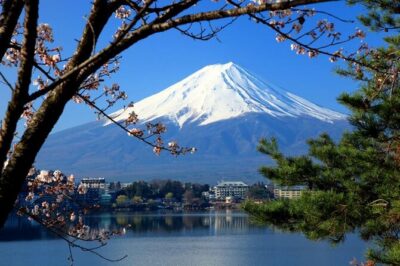
Mt Fuji and Hakone 1-Day Bus Tour Return by Bullet Train
Read our review →

teamLab Planets TOKYO Digital Art Museum Entry Ticket
Read our review →
Mt Fuji & Hakone Cruise, Drum Show Bullet Train 1 Day from Tokyo
Read our review →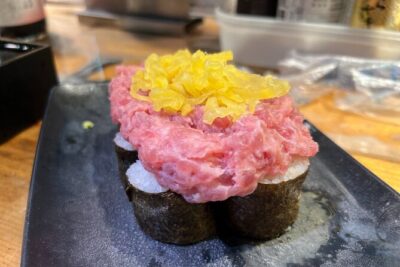
Shinjuku Food Tour (13 Dishes at 4 Local Eateries)
Read our review →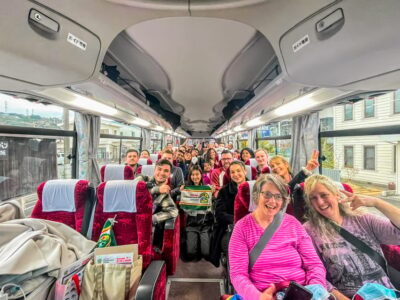
Tokyo Mt Fuji 5th St & Hakone Cruise Bus Tour w/Bullet Train
Read our review →
Flagship 2-Hours Official Street Go-Kart Tour – Tokyo Bay Shop
Read our review →