Reviewed · SAITAMA TOURS
Ecotourism and Woodcraft with a Mountain Artist Near Tokyo
Nishikawa timber once helped shape Tokyo, and this small-group outing shows you how the wood begins its journey: in a working forest cared for across generations. You meet a local guide at Higashi-Agano Station, then learn from a forestry master before stepping into a private forest that is usually closed to the public.
I like two things in particular: you get to try the work yourself, from cutting a log to using a pyrography pen, and the forest visit connects those activities to more than 300 years of local forestry. The quiet time beneath the trees gives the tour a slower, more thoughtful pace than a typical craft class.
The main consideration is the price: at $93.93 per person, it is a substantial cost for a two-and-a-half-hour activity, and lunch and travel to the meeting point are not included. It makes the most sense if you value expert local context, hands-on work, and a rare chance to enter a privately managed forest.
- A private forest near Tokyo: Walk through woodland that is not normally open to the public.
- Forestry with a family story: Learn about Nishikawa timber and a local tradition spanning more than 300 years.
- Hands-on log cutting: Feel the effort and technique involved in working with wood.
- A useful handmade souvenir: Burn a kanji of your choice onto an Edo Castle-shaped wooden smartphone stand.
- A small group: The tour is capped at eight people, with transport from Higashi-Agano Station to the activity site included.
A short trip from Tokyo into Hanno’s forests
This experience takes place in Hanno, in Saitama Prefecture, about an hour by train from Tokyo. That makes it a practical way to trade city streets for woods without planning an overnight stay. The area is also near Chichibu, Kawagoe, and Moomin Valley Park, so the outing can fit into a broader day or weekend in the region.
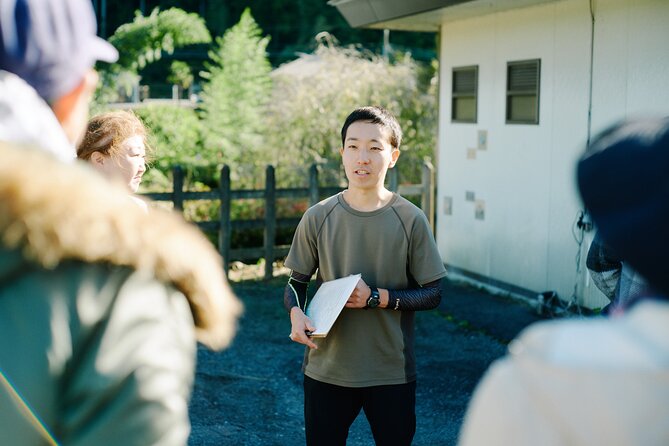
The meeting point is Higashi-Agano Station. After you leave the ticket gate, look for the guide holding a tour placard. You’ll meet the rest of the group there and get a short briefing before riding in an air-conditioned vehicle to the activity site.
The group limit of eight is useful here. Forestry is easier to understand when you can hear the guide and ask questions without competing with a crowd. It also suits an activity that moves between instruction, forest walking, and craft work.
Meet Shun and learn why Nishikawa timber matters
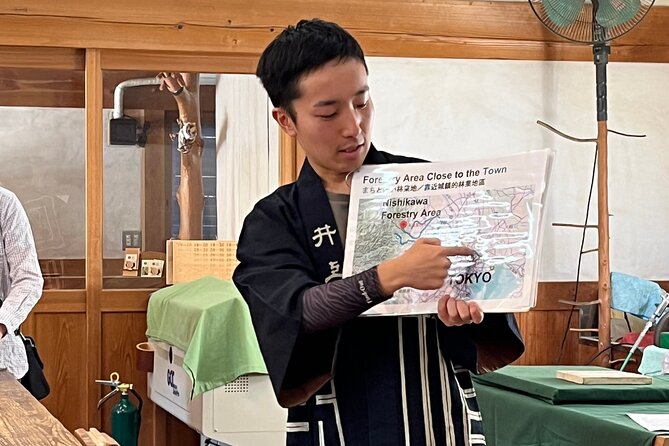
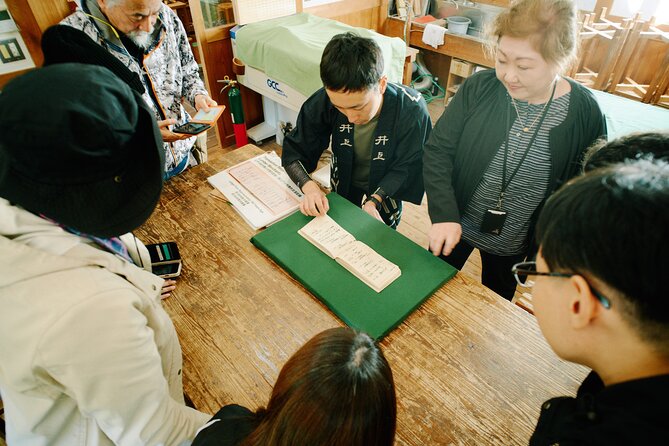
At Kirari, a woodworking studio, a forestry master introduces Nishikawa timber and the history of forestry in the area. The wood’s name points west of Tokyo, and its past use in the capital’s architecture ties this rural forest to the city’s development. That connection gives the tour a clear thread: the timber you encounter here is not just a craft material, but part of Tokyo’s building heritage.
The family behind the forest has managed it for more than 300 years. One account of the experience identifies Shun as the guide who leads visitors through the woods. Another describes the head of the Kirari millwork shop as the family’s 15th generation. Those details help put the tour’s emphasis on tradition in context: this is knowledge passed through a working family, not a general introduction delivered from a script.
You’ll hear about different kinds of wood and how their properties shape their uses. The tour also invites you to notice the aromas of three kinds of timber. That sensory detail is a simple but memorable way to compare the trees, especially if you usually encounter cedar or cypress only as finished boards, buildings, or household objects.
If you study architecture or simply enjoy understanding how materials are made, this section is likely to be one of the tour’s strongest points. The experience connects a tree, its care, and the finished object instead of treating wood as a decorative surface.
More Tokyo experiences rated in Tokyo:
- Mt Fuji and Hakone 1-Day Bus Tour Return by Bullet Train
★ 5.0 · 26,383 reviews - 1-Day Tokyo Bus Tour
★ 5.0 · 14,250 reviews - Tokyo: teamLab Planets TOKYO Digital Art Museum Entry Ticket
★ 4.6 · 9,779 reviews
Walk among trees that are managed, not left alone
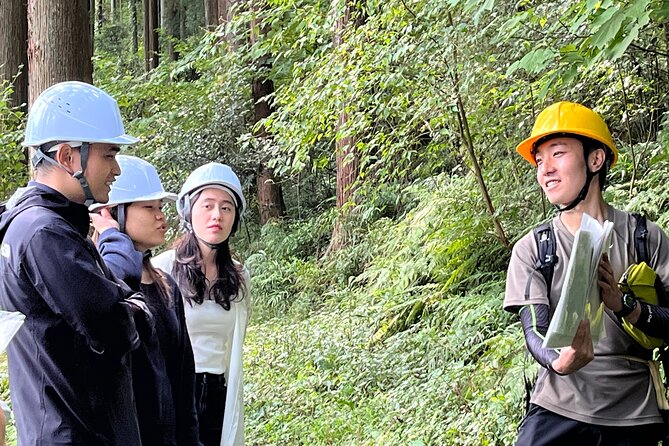
The forest is privately managed and normally closed to the public. You are not simply taking a stroll through open woodland: the guide explains how the trees are cared for and why thinning matters. Thinning removes selected trees so the remaining forest can grow in healthier conditions. It is a practical part of stewardship, not just a technical term to memorize.
The phrase mountain artist describes the foresters’ role in shaping a forest with care. That idea suits the experience. Forestry is both hands-on work and long-term judgment, with choices that affect the condition of the woods over generations. You get a closer look at the relationship between human labor and the forest than you would on a marked nature path.
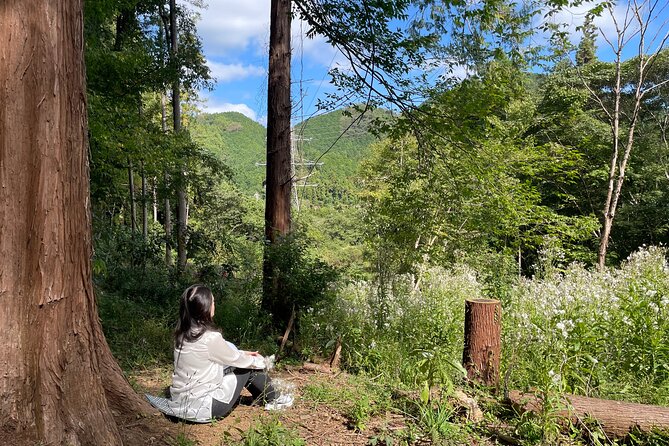
There is also time to find a tree that speaks to you, sit beneath its canopy, and enjoy a quiet moment. This slower pause is a welcome counterpoint to the practical lesson and the craft session. If you are looking for a high-energy outdoor activity, this is not that. The appeal is fresh air, close observation, and a bit of stillness.
The forest walk and the chance to relax among the trees are among the experience’s most appealing elements. The tour includes a real forest visit, not just a talk about conservation indoors. At the same time, the available details do not specify the walking distance or terrain, so if those are important to your plans, ask the operator before booking.
Cut a log and feel the work in your hands
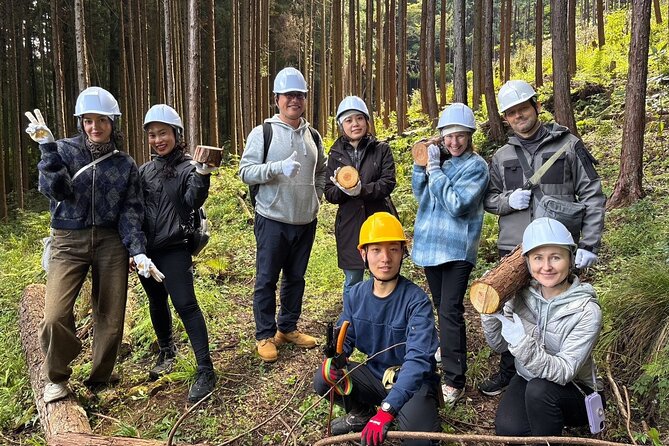
After learning about the trees and how the forest is managed, you get to try cutting a log. This is where the lesson becomes physical. A saw does not move through wood as effortlessly as it might look, and the work calls for effort and technique. That small reality makes the forestry discussion easier to remember.
Safety is part of the activity. Shun has been described as providing helmets and gloves for the forest and woodcutting experience. Follow the guide’s instructions and use the protective equipment provided. The activity is designed for most participants, but anyone unsure about handling tools should check with the operator beforehand.
This is not a full forestry apprenticeship, and you should not expect to master the craft in a few minutes. The value is in trying a basic task and gaining a more grounded sense of what working with timber involves. If you have only seen wood as a finished product, even a short turn with a saw can change how you think about the skill behind it.
Make an Edo Castle smartphone stand
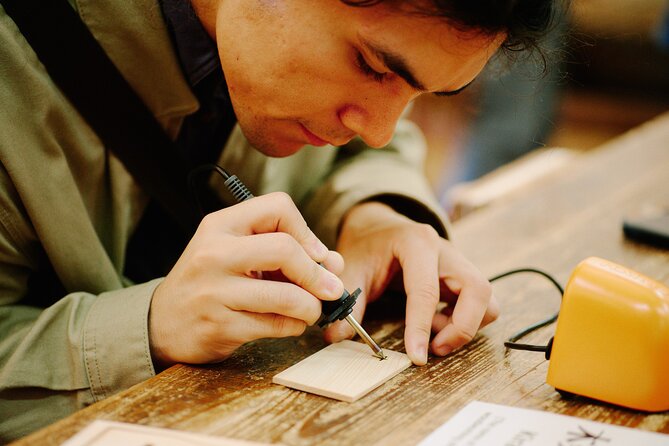
The craft session takes place at Kirari. Using a pyrography pen, you inscribe a kanji of your choice onto a piece of wood shaped like Edo Castle. The finished piece works as a smartphone stand, so your souvenir has a practical use as well as a personal mark.
The activity offers an appealing contrast with the forest walk. First, you learn about trees as part of a living, managed system. Then you work with wood as a material that can be shaped into an object. The pyrography step adds a personal element: choose a kanji that matters to you, then burn it into the wood under the guidance of the craft instructor.
The tour does not specify which kanji are available or how much time you get to choose and finish your design. If you have a particular character in mind, it may be worth checking with the operator in advance. Still, the basic idea is clear: this is not a generic trinket handed to you at the end. You take home something you have made, linked to the place and its timber.
For a different side of the same trip:
- Mt Fuji & Hakone Cruise, Drum Show Bullet Train 1 Day from Tokyo
★ 4.0 · 7,413 reviews - Tokyo: Sumo Show Experience with Chicken Hot Pot and a Photo
★ 4.8 · 6,678 reviews - Tokyo: Shinjuku Food Tour (13 Dishes at 4 Local Eateries)
★ 5.0 · 6,603 reviews - Tokyo Mt Fuji 5th St & Hakone Cruise Bus Tour w/Bullet Train
★ 4.4 · 5,024 reviews
What the $93.93 price covers
At $93.93 per person, the price is not bargain-basement for a two-and-a-half-hour outing. The value comes from the combination of a small group, access to a private forest, instruction from people connected to local forestry and woodworking, practical activities, and the finished craft. You are paying for more than a forest walk or a single craft project.
The included air-conditioned vehicle takes you from Higashi-Agano Station to the activity site and back. Your train fare to the meeting point is not included, and neither is lunch. Group discounts are available, which may help if you are booking with others.
The experience averages six days between booking and the tour date, so it is sensible to plan ahead rather than assume you can arrange it at the last minute. The maximum group size is eight, which helps keep the instruction personal. The activity requires good weather; if conditions force a cancellation, you are offered another date or a full refund. Standard cancellations made at least 24 hours before the start qualify for a full refund.
Planning your day around Higashi-Agano
The tour starts and ends at Higashi-Agano Station. Allow roughly two and a half hours for the experience, including the short vehicle rides of about 10 minutes each way and approximately two hours at Kirari and the forest. The guide returns you to the station when the activity is over.
Lunch is not included. The tour information suggests enjoying a meal at one of the guide’s recommended local restaurants around Hanno after the outing. Bring your own budget for food, and do not count on the tour price covering any other transportation.
The station meeting is straightforward: exit the ticket gate and find the guide holding a placard. Confirmation is provided at booking, and the activity is listed as near public transportation. Most people can participate, though the forest walk and log-cutting activity may not suit everyone. If you have a mobility concern or need to know about the walking conditions, contact the provider before you reserve.
Who will get the most from this forest tour
I would put this outing high on the list for people curious about Japanese woodcraft, sustainable forestry, or the story behind traditional building materials. Architecture students and anyone interested in how a natural resource is managed will get more from the explanations than someone seeking only a scenic walk.
It also suits visitors who want a nature break close to Tokyo without committing to a full-day hike. The mix of teaching, forest time, log cutting, and a small craft project gives the two-and-a-half hours a satisfying shape. The guide’s explanations and the family’s long connection to forestry make the visit feel rooted in Hanno rather than interchangeable with a craft workshop elsewhere.
It may be less appealing if you want a physically demanding hike, a long forest outing, or a low-cost activity. The tour is short, and its focus is learning and making, not covering a large area. Lunch and travel to Higashi-Agano are extra, so add those costs when comparing it with other options.
Should you book it?
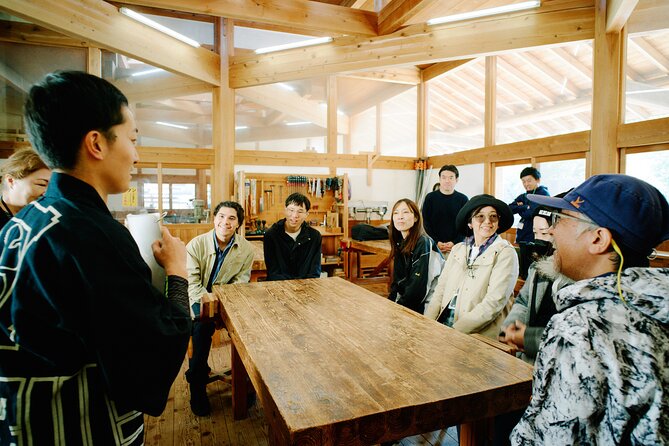
Book this tour if you want to understand how timber, forest care, and local craft fit together, and if you like the idea of taking home something you made yourself. The private-forest access and the 300-year forestry tradition give the experience a particular sense of place, while the log cutting and pyrography keep it active.
Skip it if you are mainly looking for a cheap outdoor walk or need a detailed trail itinerary before committing. For the right person, though, this is a worthwhile half-day escape from Tokyo: practical, personal, and built around a real connection between the forest and the people who care for it.
FAQ
How long is the tour?
The experience lasts about two hours and 30 minutes. Around two hours are spent at the Kirari studio and forest, with short drives to and from Higashi-Agano Station.
Where does the tour meet?
Meet at Higashi-Agano Station in Hanno, Saitama Prefecture. After exiting the ticket gate, look for the guide holding a tour placard.
What is included in the price?
The price includes the guided activity and an air-conditioned vehicle ride between Higashi-Agano Station and the activity site. Lunch and other transportation costs are not included.
How much does the tour cost?
The listed price is $93.93 per person. Group discounts are available.
How many people can join?
The tour has a maximum of eight participants.
What activities are included?
You learn about Nishikawa timber and local forestry, smell three kinds of wood, walk in the forest, learn about thinning, try cutting a log, and use a pyrography pen to mark a kanji on an Edo Castle-shaped wooden smartphone stand.
Is lunch provided?
No. Lunch is not included. After the tour, you can ask about the guide’s recommended local restaurants around Hanno.
What happens if the weather is poor or I need to cancel?
If poor weather cancels the tour, you are offered a different date or a full refund. You can cancel for a full refund up to 24 hours before the experience starts.
Freshly reviewed in Tokyo
- Tokyo: Toshimaya Sake Brewery Tour with Sake Tasting★ 5.0 · 6 reviews
- Tokyo: Tour Privado por Tokio en español★ 4.3 · 4 reviews
- :Tokyo,Shibuya /Meiji Shrine tour in KIMONO/English-friendly★ 5.0 · 4 reviews
- Tokyo:Tea ceremony experience at Komaba Warakuan★ 4.8 · 9 reviews
- :Tokyo,Shibuya/ Pro Photography in Kimono / English-Friendly★ 5.0 · 26 reviews
- Tokyo:Samurai Training : Swords, Bushido & Mental Discipline★ 5.0 · 6 reviews
- Tokyo:Mt Fuji & Hakone Day Tour with English Speaking Driver★ 5.0 · 26 reviews
- Tokyo:Nikko UNESCO World Heritage Sites Private 1-Day Tour★ 3.8 · 6 reviews
Saitama Tours, compared.
Mt. Fuji and Hakone Private Tour with English Speaking Driver
Read our review →
Unique Brewery Tour and One-of-a-Kind Sake Tasting Near Tokyo
Read our review →