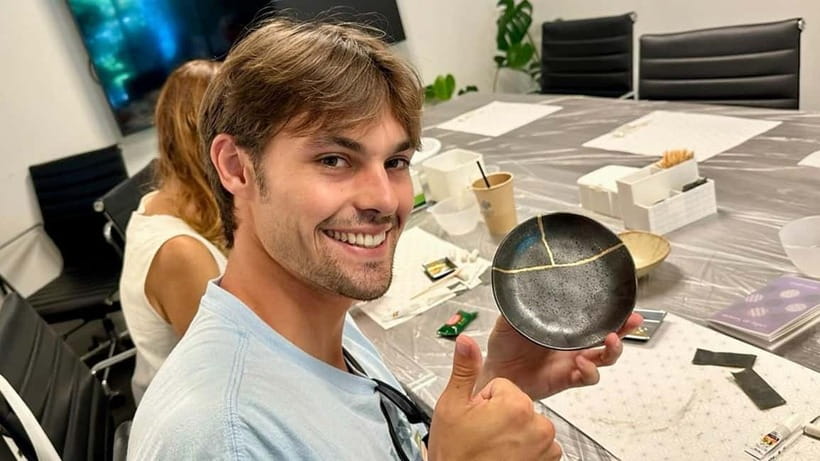
Reviewed · TOKYO TOURS
Tokyo: Discover the Art of Kintsugi in Ginza
Kintsugi turns a break into part of a ceramic object’s story. In this 90-minute Ginza workshop, you’ll work on a damaged piece of pottery and learn a practical version of the Japanese repair art, with the finished object to take home.
I like two things in particular: the small group of no more than eight, which gives the instructor room to help, and the fact that your materials and ceramic piece are included. The location also makes this a useful change of pace from Ginza’s shops and busy streets.
One important caveat: this is a quick workshop, not a traditional month-long kintsugi process. It uses synthetic lacquer and metallic powder, and the repaired piece is for display, not for microwave or everyday food use.
At a glance
- A hands-on repair: You’ll work on a provided ceramic piece, rather than simply watch a demonstration.
- A short walk from Ginza Station: The usual venue is Cafe AOU Ginza forest, on the ground floor of the Daiwa Ginza Building.
- A small class: Groups are limited to eight, with instruction in English or Japanese.
- A quick, modern method: Synthetic lacquer and metallic powder let you finish in 90 minutes.
- A take-home keepsake: Your repaired ceramic is yours to keep, and instructors have carefully packaged pieces for the journey home.
- A practical limitation: The finished item is recommended for decoration only and is not microwave-safe.
A quiet craft break near Ginza Station
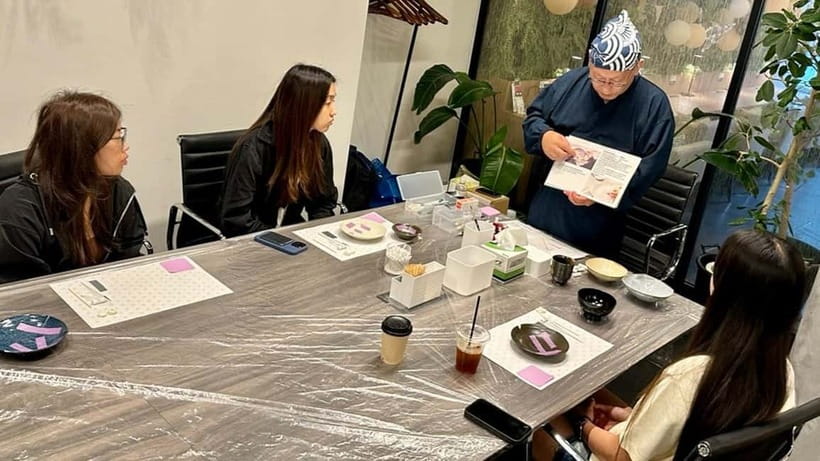
Ginza is known for shopping and polished city streets, but this class offers a different reason to spend time in the neighborhood. You’ll step into a private workshop room inside a café and settle into a focused activity, with the city just outside.
The usual meeting point is Cafe AOU Ginza forest, located at ground level in the Daiwa Ginza Building, about three minutes from Ginza Station. The workshop room is described as cozy and dedicated to the class. That setting suits the work: repairing a small object calls for attention, and an intimate room is more practical than a large, noisy space.
Do check your email the day before. The venue can change depending on availability and the number of reservations, with updated location details sent if that happens. Hotel pickup and drop-off are not included, so plan to make your own way there.
More tours and experiences in Tokyo:
- Mt Fuji and Hakone 1-Day Bus Tour Return by Bullet Train
★ 5.0 · 26,383 reviews - 1-Day Tokyo Bus Tour
★ 5.0 · 14,250 reviews - Tokyo: teamLab Planets TOKYO Digital Art Museum Entry Ticket
★ 4.6 · 9,779 reviews
What happens during the 90 minutes
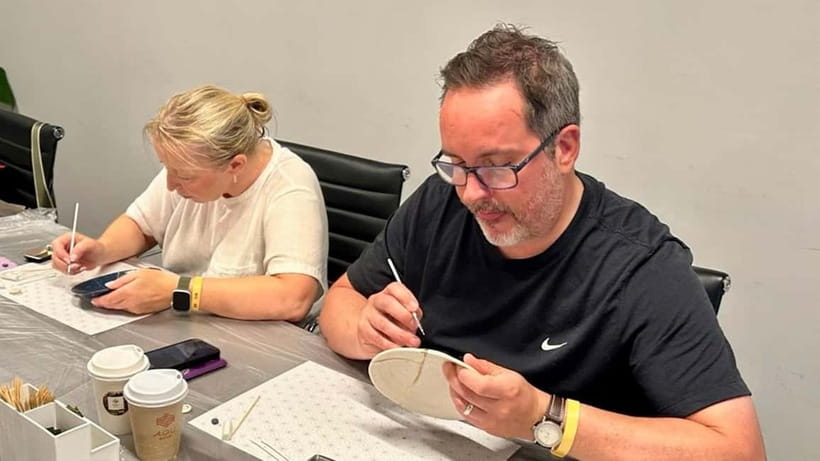
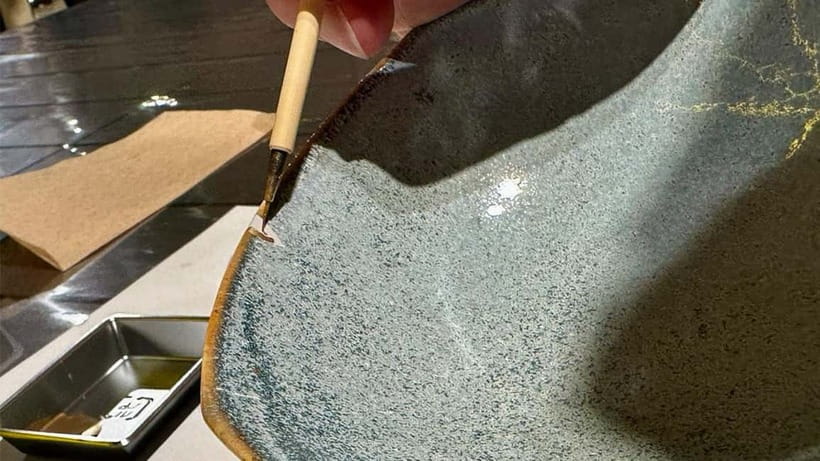
The session is built around making a repair, not just hearing about one. Your fee includes the ceramic piece, tools and materials, plus a soft drink. The instructor introduces the craft and guides you through the process step by step, helping as you work.
The exact pace can vary. One account of a class describes waiting while another participant caught up, then having the instructor help the group move along. That is a sensible trade-off in a small hands-on class: people work at different speeds, and the teacher may need to divide attention. If you want a long, unhurried period of independent practice, 90 minutes may feel brief.
Instructors named in class accounts include Tatsu and Teki Sensei. Participants have described them as friendly and helpful, and noted that the teaching can include stories about Ginza as well as an explanation of the craft. The class is offered in English and Japanese, but the available information does not specify which language is used for each session, so confirm your preferred language when choosing a time.
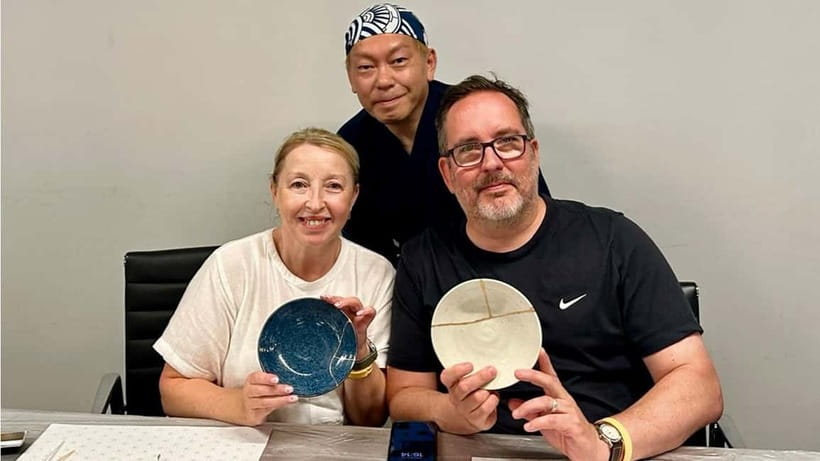
Some sessions have offered a choice between two colored cracked plates. Since the exact ceramic and options may vary, treat that as a possibility rather than a guarantee. Either way, you’ll have a piece to repair and take away.
Kintsugi, with an honest note about the materials
Kintsugi is the Japanese practice of repairing broken ceramics with lacquer and emphasizing the repaired areas. Rather than concealing the break, the repair becomes part of the object’s appearance. That idea gives the activity its cultural interest: you’re making something usable as a keepsake while considering how damage and repair can change an object’s character.
The workshop adapts the traditional process for a short class. Authentic kintsugi takes about a month to complete, while this session uses synthetic lacquer instead of natural lacquer and metallic powder instead of gold. The faster materials allow you to complete the piece within 90 minutes.
That distinction matters if you are booking because you want to learn the full traditional method. This class is an introduction and a creative activity, not a substitute for a month-long craft process. But if you want to try the basic idea with expert guidance and leave with a finished object, the shorter format has a clear advantage.
Use the repaired ceramic as decoration. It is not microwave-safe because of a risk of ignition, and the workshop recommends decorative use only. Think display piece or souvenir, not a plate for reheating dinner.
Why the small group makes a difference
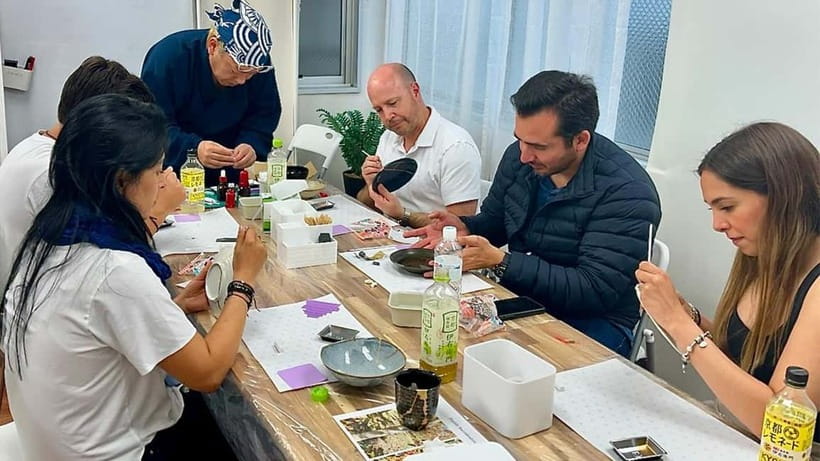
With a maximum of eight participants, the instructor has a better chance of helping you through the steps than in a large class. That matters when you are working with unfamiliar materials and want a little reassurance before making a visible mark on your ceramic.
The group size does not mean every minute will be individual instruction. The instructor is sharing attention, and a participant who needs extra help can affect the pace for everyone. Still, the class format is designed for guidance rather than a quick demonstration followed by guesswork.
The workshop also seems well suited to beginners. People with no prior kintsugi experience are specifically encouraged, and the instructions are described as clear and supportive. Families with children aged 10 and 14 have also taken part, with the instructor helping them. Children under 10 are not suitable for this activity.
For a different side of the same trip:
- Mt Fuji & Hakone Cruise, Drum Show Bullet Train 1 Day from Tokyo
★ 4.0 · 7,413 reviews - Tokyo: Sumo Show Experience with Chicken Hot Pot and a Photo
★ 4.8 · 6,678 reviews - Tokyo: Shinjuku Food Tour (13 Dishes at 4 Local Eateries)
★ 5.0 · 6,603 reviews - Tokyo Mt Fuji 5th St & Hakone Cruise Bus Tour w/Bullet Train
★ 4.4 · 5,024 reviews
The Ginza setting adds useful context
The location is convenient if you already plan to visit Ginza, and the class offers a quieter counterpoint to the district’s high-end shops. You don’t need to make shopping the purpose of your visit. One class participant described the workshop as a good reason to explore the area even if luxury retail is not your style.
The café setting can also make the arrival feel less formal. One instructor, Tatsu, has been described as waiting outside the building to help participants find the room, and a class account mentions coffee served while the lesson was explained. The listed inclusion is a complimentary soft drink, however, so don’t count on coffee specifically.
Allow a little flexibility around the address because the room can change. The standard venue is easy to identify by the building and café name, but the day-before email is the final word on where to go.
Is $75 a fair price?
At $75 per person, this is a relatively focused activity rather than a full-day cultural tour. The price includes the 90-minute class, instruction, tools and materials, a ceramic piece, and a soft drink. You also leave with the object you repaired, which gives the workshop a lasting souvenir value beyond the time spent in class.
The value is strongest if you want to make something yourself and learn the thinking behind the craft. A hands-on activity with a small group and materials included is more satisfying than a brief demonstration if you like practical classes. The take-home piece and protective packaging, which instructors have used for the journey home, are useful extras.
The price may feel less compelling if you expect a traditional, slow kintsugi process or a ceramic piece you can use at the table. This is a modern, shortened version, and the finished work is for display only. Go in with those limits clear and you’re paying for an accessible introduction, guided making and a personal keepsake, not a professional restoration course.
Who will enjoy this class most
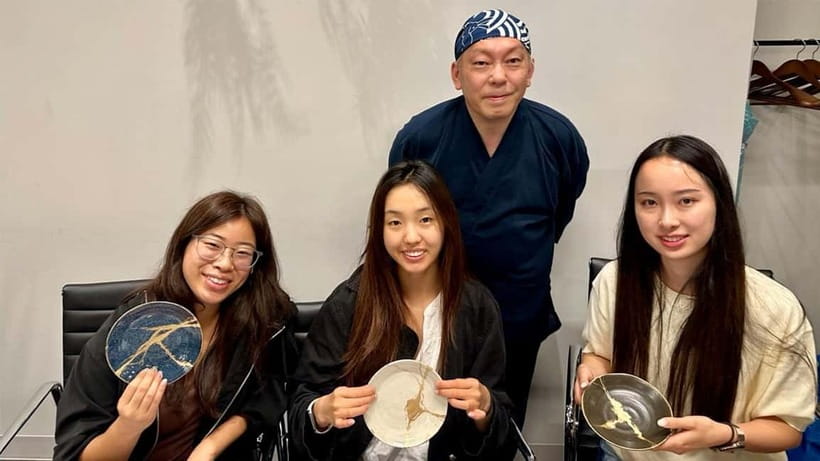
I’d recommend this for curious beginners, craft-minded visitors and anyone who wants a hands-on cultural activity in central Tokyo. It can also work well for families with children aged 10 and older, based on the activity’s stated age limit and the instructor’s experience helping children in class.
It is less suitable if you have mobility impairments, a cold, or hearing impairment, as those groups are listed as not suitable. Babies under one year are also excluded. The class does not offer hotel transport, so you’ll need to reach the venue independently.
The pace is short and guided, which makes it easy to fit around a Ginza visit. If your main goal is to learn traditional kintsugi in depth, look for a longer course. If you want to try the craft, hear about its aesthetic approach and leave with a repaired ceramic, this session makes a more compact and practical choice.
Should you book the Ginza kintsugi workshop?
Book it if you want to make something with your own hands, prefer a small class and value a souvenir with a story behind it. The strongest points are the close instruction, the welcoming café setting and the chance to take your finished piece home, carefully packed.
Skip it if you need a fully traditional repair process, want a usable plate or bowl, or need a longer practice session. At $75, it makes the most sense as a short cultural activity rather than a technical course. If that matches what you’re after, it’s a thoughtful way to spend 90 minutes in Ginza.
FAQ
How long does the workshop last?
The workshop lasts 90 minutes. Available starting times depend on the date you choose.
Where is the meeting point?
The usual meeting point is Cafe AOU Ginza forest, on the ground floor of the Daiwa Ginza Building, near Ginza Station. The venue may change, with new location details sent by email one day before the workshop.
What is included in the price?
The class includes a 90-minute workshop, tools and materials, a ceramic piece to restore, instructor guidance and a complimentary soft drink.
Can I take my repaired ceramic home?
Yes. You keep the piece you repair. Instructors have packaged finished ceramics to help protect them for the journey home.
Is the finished piece safe to use for food or in a microwave?
The workshop recommends using it for decoration only. It is not microwave-safe because of a risk of ignition.
Is this traditional kintsugi?
It is a quick introduction using synthetic lacquer and metallic powder. Traditional kintsugi takes about a month to complete, so this workshop uses different materials to finish within 90 minutes.
What languages are available, and how large is the group?
Instruction is available in English and Japanese. Groups are limited to eight participants.
Freshly reviewed in Tokyo
- Tokyo: Toshimaya Sake Brewery Tour with Sake Tasting★ 5.0 · 6 reviews
- :Tokyo,Shibuya /Meiji Shrine tour in KIMONO/English-friendly★ 5.0 · 4 reviews
- Tokyo: Tour Privado por Tokio en español★ 4.3 · 4 reviews
- Tokyo:Tea ceremony experience at Komaba Warakuan★ 4.8 · 9 reviews
- :Tokyo,Shibuya/ Pro Photography in Kimono / English-Friendly★ 5.0 · 26 reviews
- Tokyo:Samurai Training : Swords, Bushido & Mental Discipline★ 5.0 · 6 reviews
- Tokyo:Mt Fuji & Hakone Day Tour with English Speaking Driver★ 5.0 · 26 reviews
- Tokyo:Nikko UNESCO World Heritage Sites Private 1-Day Tour★ 3.8 · 6 reviews
Tokyo Tours, compared.

Mt Fuji and Hakone 1-Day Bus Tour Return by Bullet Train
Read our review →

teamLab Planets TOKYO Digital Art Museum Entry Ticket
Read our review →
Mt Fuji & Hakone Cruise, Drum Show Bullet Train 1 Day from Tokyo
Read our review →
Shinjuku Food Tour (13 Dishes at 4 Local Eateries)
Read our review →
Tokyo Mt Fuji 5th St & Hakone Cruise Bus Tour w/Bullet Train
Read our review →
Flagship 2-Hours Official Street Go-Kart Tour – Tokyo Bay Shop
Read our review →