
Reviewed · HARAJUKU TOURS
Tokyo Shibuya & Harajuku Walking tour With A Guide
Shibuya’s famous crossing is more than a photo stop: it is a lively starting point for a walk that shows how quickly Tokyo shifts from crowded shopping streets to quieter shrine grounds. This private tour connects Shibuya and Harajuku on foot, with a local guide to help you make sense of the contrasts.
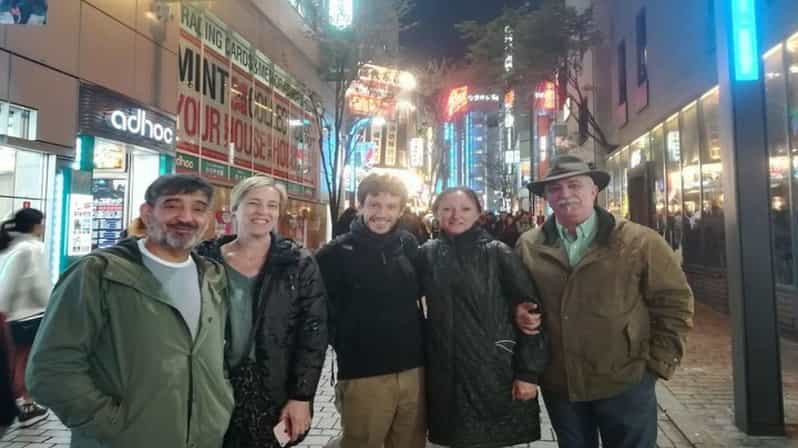
I like two things in particular: you can customize a private route around the sights that interest you, and the guide can offer practical tips for the rest of your stay. Past guides have included Sergio and Teresa Calzone, though you cannot assume you will have either of them.
The main consideration is pace. Nine listed stops are fitted into three hours, and one Italian-speaking participant would have preferred a shorter tour while another wanted more historical and cultural detail. Tell your guide what matters to you early, so the walk suits your interests.
At a glance

- Shibuya and Harajuku in one walk: Follow a route that takes in the crossing, Hachiko, shopping streets, fashion districts and Meiji Shrine.
- Private group: You will not be paired with strangers, and the route can be customized.
- Three hours on foot: The listed stops are allotted about 20 minutes each, though walking between them also takes time.
- A guide for more than directions: The tour is intended to provide local context and useful suggestions for other things to do.
- Languages and access: Guides are listed as speaking English, French, Italian, Spanish and Portuguese. The tour is described as wheelchair accessible.
- $53 per person: Food and drinks are not included. Transport arrangements can depend on the option you book, so check what applies to yours.
Shibuya Crossing sets the pace
The walk begins in a district built for movement. Shibuya Station is a major transportation hub, and the crossing nearby is the image many people carry in their heads before they arrive in Tokyo. When the signals change, crowds stream across from several directions. It can look like chaos from above, but the appeal is in watching the city’s everyday rhythm at street level.
Your guide can help you take in the scene without treating it as just a quick photo stop. You might ask how the crossing fits into Shibuya’s daily life, or use the first stretch to explain what you want from the rest of the tour. That conversation matters: the route is private and can be customized, so a few clear priorities may make the limited time more useful.
The Hachiko Statue is another stop in this busy station area. It is a small memorial amid the movement of one of Tokyo’s best-known meeting points. Expect a popular photo spot rather than a quiet place to linger. If you want a picture, be ready to wait briefly or take it quickly, then let your guide explain the statue’s place in local life.
The starting point may vary by booking option. Dolce Shibuya and Hashimoto Bldg. are listed as possible starting locations, while the activity description also names Shibuya Station as the tour’s starting area. Check your confirmation for the exact meeting point.
More Shibuya tours in Tokyo:
- Official Street Go-Kart in Shibuya
★ 5.0 · 3,435 reviews - Tokyo: Street Kart Experience in Shibuya
★ 4.9 · 1,484 reviews - Shibuya Meltdown Nightlife Tour: All-You-Can-Drink Bar Hopping
★ 5.0 · 1,058 reviews
Center Gai and Shibuya 109 show two sides of shopping
Center Gai is a busy shopping street where the focus is on the energy of Shibuya: people moving between shops, signs and places to eat. The route gives you a chance to see the district in motion and ask your guide what makes it different from the quieter streets ahead. The itinerary allows about 20 minutes here, including the stop and sightseeing, so this is a quick orientation rather than time for a serious shopping trip.
Shibuya 109 offers a more concentrated look at fashion. Its many floors are known for styles aimed at young shoppers, making it a useful stop if you are curious about how Tokyo’s youth culture appears in clothing and retail. You will likely have time to look around and get a broad sense of the place, not browse every level at leisure.
These stops work best as a comparison. Center Gai gives you the busy street scene; Shibuya 109 puts fashion front and center. If you are more interested in shopping than commentary, say so. If you would rather hear how fashion connects to the neighborhoods, ask your guide to spend more time explaining that side of the route.
Cat Street and Ura-Hara reward a slower look
The walk between Shibuya and Harajuku includes Cat Street and the Ura-Hara area. Cat Street is known for independent boutiques and street art, while Ura-Hara has distinctive shops and a less conventional fashion scene than the major retail corridors. These streets give the route a change of scale: instead of a huge crossing or a multi-floor department store, you are looking at smaller shops and details along the way.
A guide can be especially useful here because the appeal is not limited to one landmark. You can ask what kinds of shops define the area, how it differs from the main shopping streets, or which corners are worth noticing. A past participant appreciated being shown lesser-known places and receiving suggestions for the rest of the visit. That is the kind of value to seek from a private walk: not a long list of stops, but help deciding what you might want to explore later on your own.
The trade-off is that a guided pass-through is not the same as browsing. If you spot a shop you want to enter, ask whether the schedule can accommodate it. Three hours covers several neighborhoods, and time spent inside shops will mean less time elsewhere.
Takeshita Street brings Harajuku’s youth culture into view
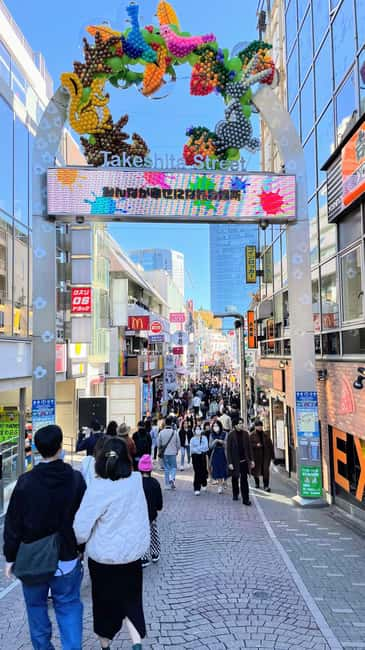
Takeshita Street is one of Harajuku’s best-known lanes, with quirky boutiques, trendy shops and colorful street art. The tour frames it as a place to see the clothing and styles embraced by Tokyo’s young people. It is a lively contrast with the calmer approach to Meiji Shrine and the polished retail feel of Omotesando.
This is also a stop where expectations help. Takeshita Street is famous and can be busy, so it may feel more like a packed shopping lane than an intimate local secret. You will get a useful introduction to its character, but the 20-minute allocation is short if you want to stop often, shop or take your time with photos.
Harajuku is also listed as its own stop, with another 20-minute period. Rather than treating it as a separate landmark, think of it as a chance to connect the street-level details with the wider neighborhood. Your guide can explain how the district’s fashion identity fits with the boutiques and streets you have already seen.
More Harajuku tours in Tokyo:
- Tokyo Go-Kart Tour Shibuya-Harajuku-Shinjuku (*IDP Required)
★ 5.0 · 217 reviews - Tokyo: Guided Go Kart Tour from Harajuku to Shibuya Crossing
★ 4.5 · 166 reviews - Shibuya & Harajuku: Hidden Gems & Highlights Private Tour
★ 4.7 · 139 reviews - Harajuku Kawaii Fashion and Pop-Culture Tour
★ 5.0 · 94 reviews
Omotesando changes the mood
Omotesando Avenue offers a sharp shift from Takeshita Street. The route describes it as an upscale area lined with designer boutiques, and its broader, more polished feel makes a useful counterpoint to Harajuku’s alternative fashion scene. Even if you are not shopping, the change in architecture and atmosphere helps show how close Tokyo’s contrasting retail worlds can be.
The stop is allotted about 20 minutes, so think of it as a guided look rather than an extended browse. If you are interested in architecture or design, ask your guide to focus on those features. If you would rather spend the time on youth culture or local recommendations, the private format gives you a chance to say so.
Meiji Shrine offers a quieter finish

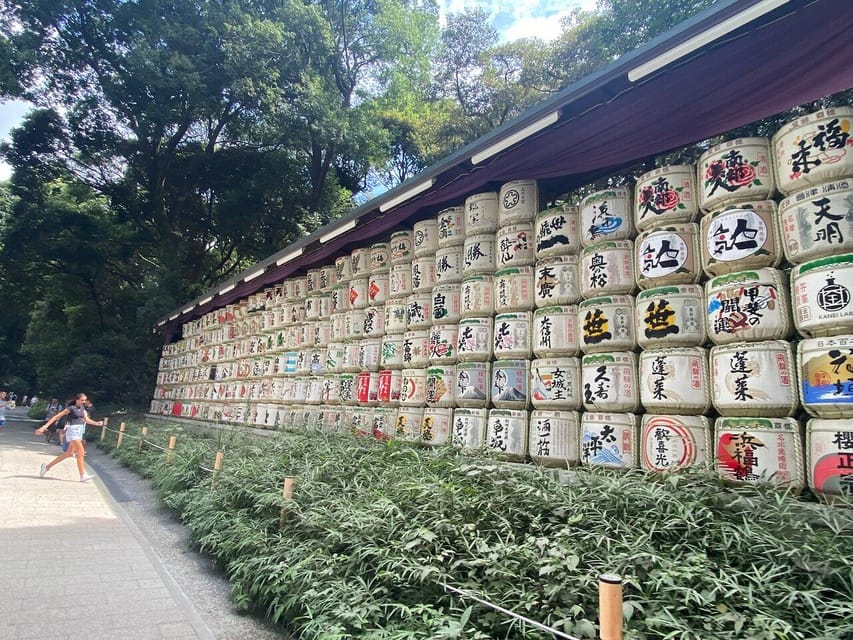
A brief detour to Meiji Shrine brings a calmer note to a route otherwise centered on shopping districts and city streets. The approach is described as serene, offering a pause from the crowds and commercial activity around Harajuku and Shibuya. The itinerary allots roughly 20 minutes for the visit, guided walk and sightseeing.
That timing makes this an introduction, not a long shrine visit. You can take in the approach and atmosphere, and ask your guide about the shrine’s cultural or religious context. One participant who toured in Italian found the guide friendly but wanted more explanation of Japanese history, culture and religion. If that context is important to you, mention it when you meet. A guide can only tailor the discussion if they know what you want to learn.
The full listed route includes Meiji Shrine, Omotesando, Ura-Harajuku, Takeshita Street, Harajuku, Shibuya 109, Center Gai and Hachiko. It is a broad introduction to two districts, not a deep study of any one site. The sequence may be adjusted for your option or preferences, so use the private format to shape the balance.
What three hours and $53 buy you
At $53 per person, the main value is a private guide for a three-hour introduction to two districts that can be confusing to stitch together on your own. You are paying for local context, a route that can be adjusted and a chance to ask questions as you go. One visitor described a guide getting to know the group and offering helpful suggestions; that personal exchange is likely to matter more than simply being led from one photo stop to the next.
The price does not include food or drinks. A past evening walk ended with dinner, but dining is not part of the stated inclusions, so do not plan on a meal being provided. The tour is described as a walking tour, and car transport is not included. The details also refer to public transport as part of the activity, while noting that local transport may depend on the option selected. Confirm the transport arrangement for your booking rather than assuming every transfer is covered.
The schedule is full. Each of the nine listed stops is allotted about 20 minutes, which totals the entire three hours before accounting for the walking between them. In practice, the guide may need to keep the group moving, and customization may mean shortening or skipping a stop. If you prefer a gentler pace, ask whether a shorter two-hour route is possible; one participant felt two hours might be enough.
Who should book this walk
I would choose this tour if you want a quick, guided introduction to Shibuya and Harajuku, especially if you enjoy fashion, street life and seeing how a city changes from block to block. It is a good fit for a first visit when you want orientation and a local person to answer questions. It may also suit you if you value guide suggestions that help shape the rest of your stay.
It is less suited to anyone hoping for a detailed lecture on Japanese history or religion unless that is arranged in advance. The route gives Meiji Shrine a short visit, and the emphasis overall is on neighborhoods, shopping and contemporary culture. It is also not ideal if you want hours to browse stores or stop for a meal.
Before booking, check the meeting point and transport details for your chosen option. When you meet your guide, name your priorities: fashion, architecture, shrine context, photo stops or practical recommendations. With that small bit of planning, this private walk can be a lively and useful way to get your bearings.
FAQ
How long is the tour?
The tour lasts three hours.
How much does it cost?
The stated price is $53 per person.
Is the tour private?
Yes. It is described as a private, exclusive tour, with no one else added to your group.
Can the route be customized?
Yes. Customization is included, so you can tell your guide which places or topics interest you.
Where does the tour start?
The meeting point can vary by booking option. Dolce Shibuya and Hashimoto Bldg. are listed as possible starting locations, and Shibuya Station is named as the central starting area.
Which places are included on the route?
The listed stops include Meiji Shrine, Omotesando Street, Ura-Harajuku, Takeshita Street, Harajuku, Shibuya 109, Center Gai Shopping Street and the Hachiko Statue.
What languages are available?
Guides are listed as speaking English, French, Italian, Spanish and Portuguese.
Is the tour wheelchair accessible?
The activity is described as wheelchair accessible.
Are food and drinks included?
No. Food and drinks are not included.
Is local transportation included?
The tour is described as a walking tour, and car transportation is not included. Public transport is mentioned as part of some options, so check the details of the option you select.
More walking tours in Tokyo
- Tokyo Tsukiji Fish Market Food and Culture Walking Tour
★ 5.0 · 3,184 reviews - Tokyo: Imperial Palace and Shogun Historical Walking Tour
★ 5.0 · 2,251 reviews - Tokyo: Shinjuku Local Bar and Izakaya Guided Walking Tour
★ 4.9 · 1,794 reviews - Tokyo: Tsukiji Fish Market Food and Walking tour
★ 5.0 · 1,724 reviews
Freshly reviewed in Tokyo
- Tokyo: Toshimaya Sake Brewery Tour with Sake Tasting★ 5.0 · 6 reviews
- :Tokyo,Shibuya /Meiji Shrine tour in KIMONO/English-friendly★ 5.0 · 4 reviews
- Tokyo: Tour Privado por Tokio en español★ 4.3 · 4 reviews
- Tokyo:Tea ceremony experience at Komaba Warakuan★ 4.8 · 9 reviews
- :Tokyo,Shibuya/ Pro Photography in Kimono / English-Friendly★ 5.0 · 26 reviews
- Tokyo:Samurai Training : Swords, Bushido & Mental Discipline★ 5.0 · 6 reviews
- Tokyo:Mt Fuji & Hakone Day Tour with English Speaking Driver★ 5.0 · 26 reviews
- Tokyo:Nikko UNESCO World Heritage Sites Private 1-Day Tour★ 3.8 · 6 reviews
Harajuku Tours, compared.

Tokyo Go-Kart Tour Shibuya-Harajuku-Shinjuku (*IDP Required)
Read our review →
Guided Go Kart Tour from Harajuku to Shibuya Crossing
Read our review →
Shibuya & Harajuku: Hidden Gems & Highlights Private Tour
Read our review →
Meiji Jingu, Harajuku, Shibuya, and Shijuku Tour
Read our review →
Graffiti in Tokyo Walking Tour: Shibuya and Harajuku
Read our review →
SAMURAI EXPERIENCE in Tokyo(Harajuku)【SAMURAI’ve】
Read our review →
Tokyo Bike Tour: Shibuya, Harajuku & Hidden Gems
Read our review →Browse the lists this tour appears in