
Reviewed · MEIJI SHRINE TOURS
Tokyo: Meiji Jingu Shrine and Shinto Culture Walking Tour
Meiji Shrine offers a striking change of pace from Harajuku’s busy streets: walk into a forest of about 100,000 trees, and the city soon feels far away. This two-hour tour uses that calm setting to explain Shinto customs, the shrine’s history, and the meaning behind details you could easily pass without noticing.
I like the small-group format, which gives you room to ask questions, and the mix of shrine landmarks with time in the Imperial Garden. One consideration: two hours is a brisk visit, and the sake and wine barrel stops are short, so this is an introduction rather than a slow, unstructured wander.
Key points
- The forest is part of the experience: The approach through roughly 100,000 trees makes the shrine feel removed from central Tokyo.
- You get context for Shinto customs: The guide explains rituals and symbolism, helping you understand what you see rather than simply follow the path.
- The route includes more than the main shrine: You visit Meiji Jingu Gyoen, the big torii, and consecrated sake and wine barrels.
- The shrine stop gets the most time: About an hour is set aside for Meiji Shrine, with shorter guided stops along the way.
- It costs $19 for two hours: The price includes an English-speaking guide and admission to the shrine and Imperial Garden.
- Expect a personal, question-friendly walk: Groups are kept small, though the exact size can vary.
A forest walk into Tokyo’s spiritual heart
Harajuku is known for its youthful energy, but this tour starts near the neighborhood and quickly turns toward a quieter setting. From the meeting point at the Starbucks closest to Meiji Shrine, you follow your guide into grounds where the trees and approach paths help set a more reflective pace.
The forest is not just a pretty backdrop. The tour frames nature and spirituality as closely linked in Japanese tradition, giving you a useful idea of why the setting matters before you reach the shrine itself. If you arrive expecting a quick photo stop, the walk offers more: a chance to learn how a sacred place fits into the everyday life of Tokyo.
The route is led in English, and the small-group setup is a practical advantage. You can ask questions as they come up, rather than waiting for a large group to move on. Past guides have included Maya, Minori, Nicholas, Hoshi, Naruto, Matt, Yumi, Haydn, Andres, and Yota. The guide on your date may differ, but the emphasis is consistent: history, Shinto customs, and time for questions.
More Meiji Shrine visits in Tokyo:
- Tokyo: Meiji Shrine, Asakusa, Skytree Bus Tour and Cruise
★ 4.7 · 1,986 reviews - Tokyo Panoramic 1 Day: Meiji Shrine, Asakusa, Odaiba and SKYTREE®
★ 4.5 · 1,222 reviews - Tokyo: Meiji Shrine Walking Tour — Shinto & Imperial System
★ 4.9 · 266 reviews
Meiji Jingu Gyoen: a calmer first stop
The tour begins its main sightseeing at Meiji Jingu Gyoen, the Imperial Garden within the shrine grounds. About 30 minutes are allotted here for a guided visit and photo stop. That gives you time to look around and hear how the garden relates to the larger shrine setting, rather than rushing straight to the central buildings.
This is a useful opening because it eases you into the visit. The garden offers a quieter first chapter before the route moves toward the larger landmarks. The trade-off is that 30 minutes is a set portion of a short tour. If you like to linger over photographs or explore every corner at your own speed, you may want to return later if your plans allow.
Admission to the Imperial Garden is included, so you do not have to sort out a separate entry during the tour. That helps keep the visit simple, especially if Meiji Shrine is one of your first cultural stops in Tokyo.
Passing through the big torii
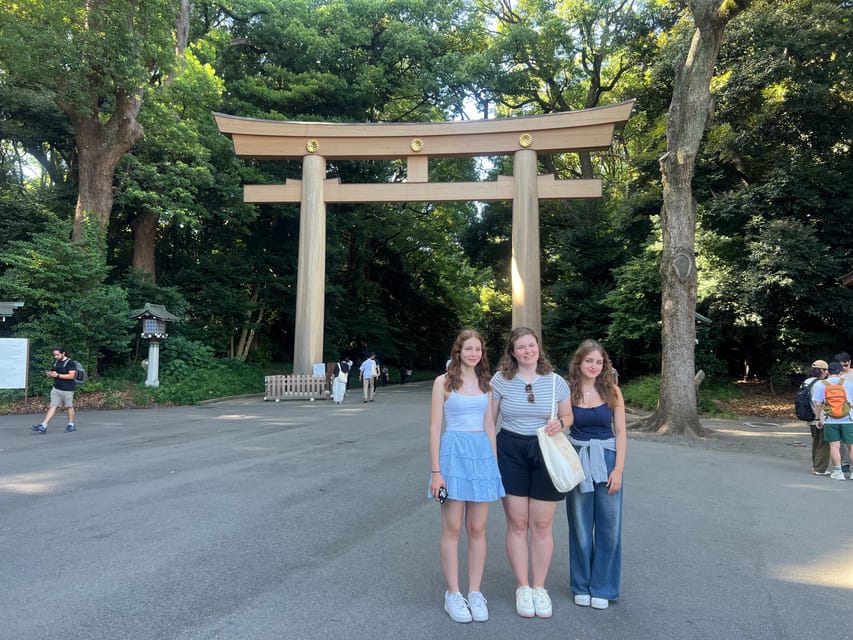
The next stop is the big torii, with about 10 minutes of guided explanation. The gate marks a transition from the ordinary city to the sacred precinct. Your guide can explain the meaning of this threshold and how to approach the shrine respectfully, turning a familiar-looking landmark into part of the story.
Ten minutes is enough for an introduction and a few photographs, not an extended pause. I’d treat it as a chance to listen and look closely, then let the guide lead you onward. The value is less in the time spent at the gate than in understanding why it matters on the way to the shrine.
The route also gives you a practical primer in shrine etiquette. Guides on past tours have explained how to behave at shrines and how Shinto differs from Buddhism. If you are new to Japan, that context can make later visits easier, too.
Sake and wine barrels, with a story behind them
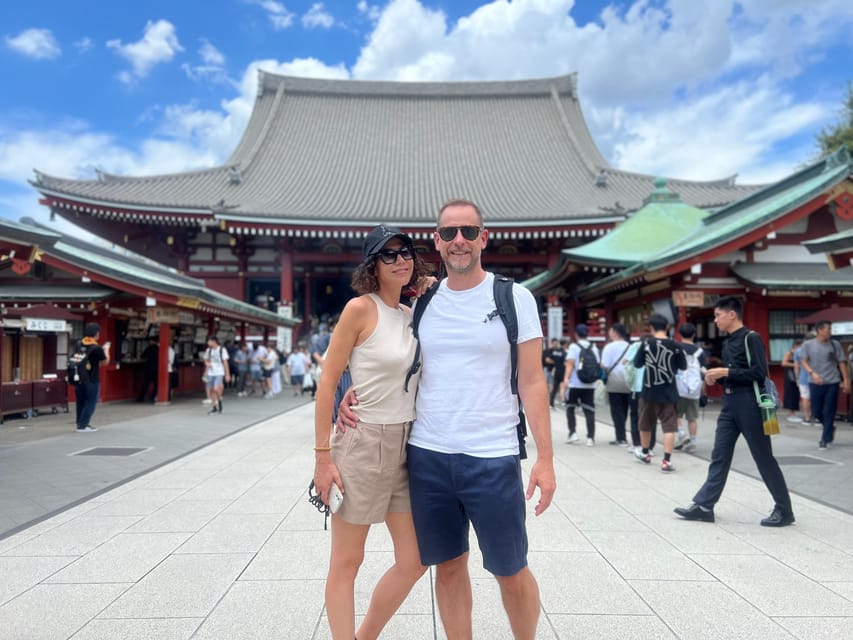
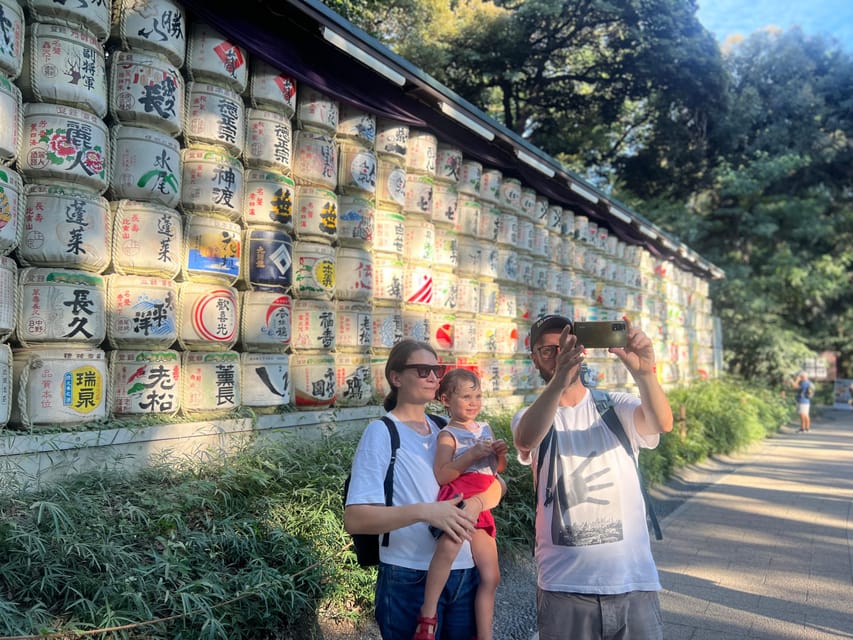
The tour pauses at the consecrated sake barrels for about 10 minutes, then visits the consecrated wine barrels for another 10 minutes. These displays are distinctive visual markers along the approach, and the guide explains their connection to the shrine and its traditions.
It is easy to treat rows of barrels as a photo opportunity and move on. A guide helps you notice that the grounds contain more than gates and buildings, and that offerings and symbols have a place in the religious landscape. The two short stops also break up the walk before the longer visit to the shrine.
Do not expect a tasting: these are guided sightseeing stops, not food or drink sessions. The tour’s appeal here is interpretation, not sampling. If you enjoy learning the meaning behind details that might otherwise look decorative, these brief pauses earn their place in the route.
More walking tours in Tokyo:
- Tokyo Tsukiji Fish Market Food and Culture Walking Tour
★ 5.0 · 3,184 reviews - Tokyo: Imperial Palace and Shogun Historical Walking Tour
★ 5.0 · 2,251 reviews - Tokyo: Shinjuku Local Bar and Izakaya Guided Walking Tour
★ 4.9 · 1,794 reviews - Tokyo: Tsukiji Fish Market Food and Walking tour
★ 5.0 · 1,724 reviews
An hour at Meiji Shrine
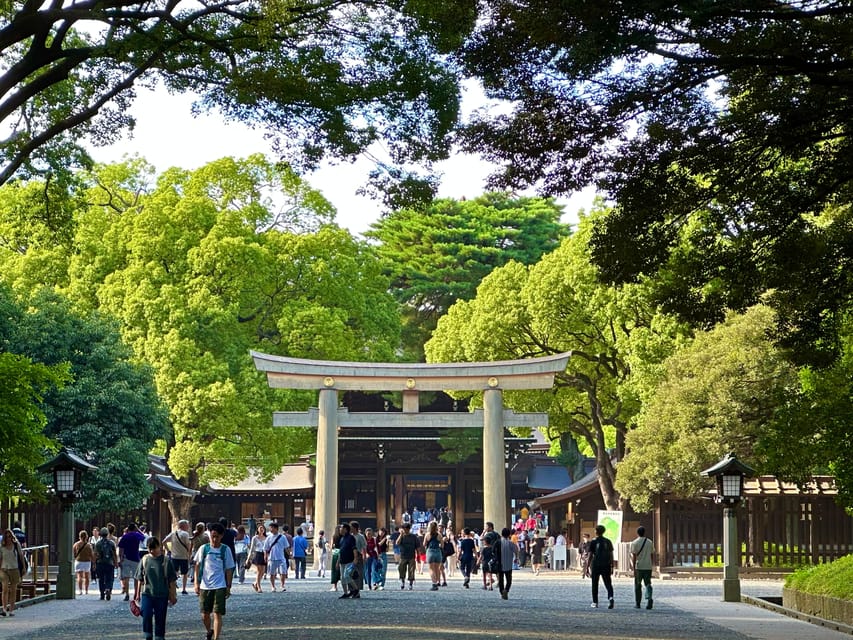
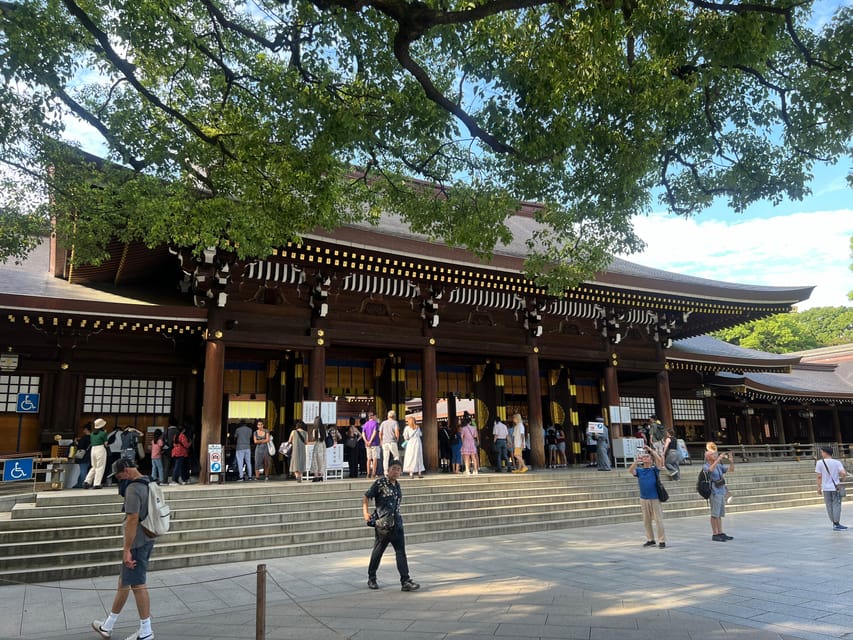
The main shrine visit takes about an hour, making it the longest stop on the itinerary. Here, the earlier explanations come together: you have seen the forest approach, crossed the torii, and learned about the barrel displays before turning your attention to the shrine itself.
The guide covers the shrine’s history, the Meiji period, and Shinto rituals. You can ask questions about what you are seeing and how the customs work. Some guides have also explained distinctions between Shinto and Buddhist teachings, a helpful point in a country where both traditions have shaped religious life.
This is where the small-group format matters most. Questions about rituals can be hard to answer by reading a sign, and the guide can respond in context as you move through the grounds. Past groups have sometimes been very small, and one participant described having a private tour when other people did not arrive. That can happen, but you should not count on a one-to-one visit.
Meiji Shrine is still a sacred place, not a staged cultural performance. The best way to enjoy it is to stay attentive, follow your guide’s instructions, and give worshippers room. The tour is designed to explain customs, not to turn every moment into a photo stop.
What you get for $19
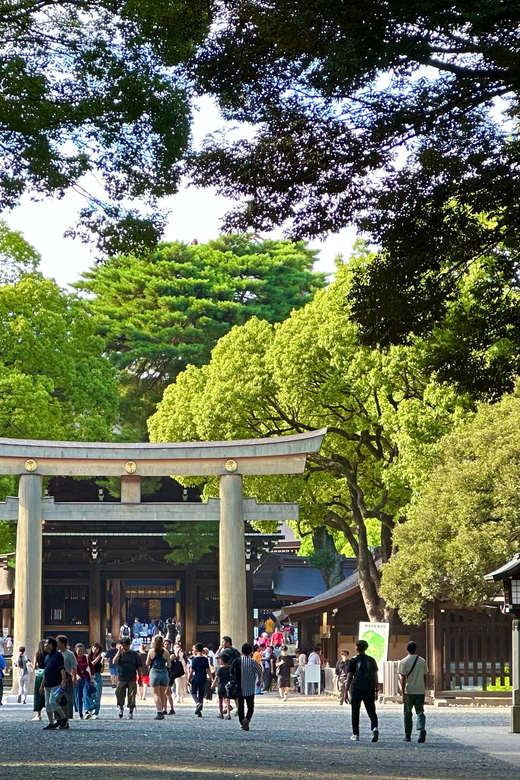
At $19 per person, this is a reasonably priced way to add expert context to a place many people visit on their own. Admission to Meiji Shrine and the Imperial Garden is included, as are the English-speaking guide, historical insights into the districts, and photos taken during the tour.
The key value is the explanation. Meiji Shrine is easy to reach and walk through independently, but without context you may miss why particular rituals, gates, and offerings matter. If you like to understand a place while you are in it, the guided format can make two hours feel more substantial than a solo stroll.
The tour also gives you a chance to get local suggestions. Several guides have shared recommendations for places to visit or eat in Tokyo, and some have taken photos for the group. These extras depend on the guide and the conversation, so think of them as a welcome bonus rather than a promised itinerary feature.
Pace, group size, and practical details
The tour lasts two hours and returns to its starting point at the Starbucks closest to Meiji Shrine. The meeting coordinates are 35.6705208, 139.7031067. Check the exact meeting instructions when booking, since the named location is a Starbucks near the shrine rather than a general Harajuku landmark.
The listed stops add up to two hours: 30 minutes in the garden, 10 minutes at the big torii, 10 minutes at each set of barrels, and one hour at the shrine. That structure is useful if you want a clear, compact introduction. It does mean the garden and barrel stops are brief, and the tour is not built for a long, independent wander.
The activity is listed as wheelchair accessible. If accessibility is important to your plans, confirm the route’s suitability for your specific needs before booking, since the tour information does not describe the paths in detail.
You can reserve now and pay later, and cancellation up to 24 hours in advance is eligible for a full refund. Starting times vary, so check availability for your date.
Who will get the most from this walk
I’d recommend this tour if you are new to Tokyo, curious about Shinto, or keen to understand the setting as well as see the shrine. Several past participants used it near the start of their Japan trip, and that timing makes sense: an introduction to shrine etiquette and local culture can be useful throughout the rest of your visit.
It also works well for a return visitor who wants a more thoughtful look at a familiar landmark. The forest, garden, and shrine grounds provide a different rhythm from the city’s shopping streets, while a guide can go beyond the basic history if you bring questions.
Families may appreciate the guide-led structure. One parent described a guide keeping children engaged while explaining the shrine, and another family enjoyed writing on an ema, a wooden wish plaque. Those activities are not specified as guaranteed parts of this tour, so ask your guide what is available during your visit rather than planning around them.
You may prefer to explore independently if you want to set your own pace, spend a long time photographing the grounds, or avoid a scheduled group walk. The tour offers a compact, guided introduction, not a full day at Meiji Shrine.
Should you book this Meiji Shrine tour?
For $19, I think this is a strong choice if you want the forest, garden, and shrine explained in plain English, with time to ask questions. The best reason to book is not simply to see Meiji Shrine, but to understand the rituals and details that give the place meaning. The main compromise is pace: the walk covers several stops in two hours, so you will not have unlimited time at any one of them.
Book it early in your Tokyo stay if cultural context and local pointers would help you get oriented. Choose a self-guided visit instead if quiet wandering matters more to you than interpretation. If you go, bring questions, listen at the short stops, and let the forest walk set the tone.
FAQ
How long is the Meiji Shrine tour?
The tour lasts two hours, returning to the Starbucks near Meiji Shrine where it begins.
What language is the tour in?
The live guide speaks English.
Where is the meeting point?
Meet in front of the Starbucks closest to Meiji Shrine. The listed coordinates are 35.6705208, 139.7031067.
What does the $19 price include?
The price includes a professional English-speaking guide, photos taken during the tour, historical insights into the districts, and admission to Meiji Shrine and the Imperial Garden.
Which places are included in the route?
The route includes Meiji Jingu Gyoen, the big torii, the consecrated sake barrels, the consecrated wine barrels, and Meiji Shrine.
Is the tour wheelchair accessible?
Yes, the activity is listed as wheelchair accessible.
Can I cancel for a refund?
Yes. You can cancel up to 24 hours in advance for a full refund.
Do I have to pay when I reserve?
No. The reserve-now, pay-later option lets you book without paying immediately.
Freshly reviewed in Tokyo
- Tokyo: Toshimaya Sake Brewery Tour with Sake Tasting★ 5.0 · 6 reviews
- :Tokyo,Shibuya /Meiji Shrine tour in KIMONO/English-friendly★ 5.0 · 4 reviews
- Tokyo: Tour Privado por Tokio en español★ 4.3 · 4 reviews
- Tokyo:Tea ceremony experience at Komaba Warakuan★ 4.8 · 9 reviews
- :Tokyo,Shibuya/ Pro Photography in Kimono / English-Friendly★ 5.0 · 26 reviews
- Tokyo:Samurai Training : Swords, Bushido & Mental Discipline★ 5.0 · 6 reviews
- Tokyo:Mt Fuji & Hakone Day Tour with English Speaking Driver★ 5.0 · 26 reviews
- Tokyo:Nikko UNESCO World Heritage Sites Private 1-Day Tour★ 3.8 · 6 reviews
Meiji Shrine Tours, compared.

Meiji Shrine, Asakusa, Skytree Bus Tour and Cruise
Read our review →
Tokyo Panoramic 1 Day: Meiji Shrine, Asakusa, Odaiba and SKYTREE®
Read our review →
Meiji Shrine Walking Tour — Shinto & Imperial System
Read our review →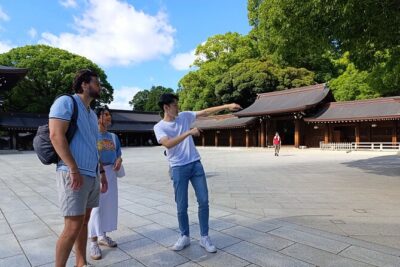

1 Day Bus Tour with Meiji-Jingu,Odaiba,lunch&Skytree
Read our review →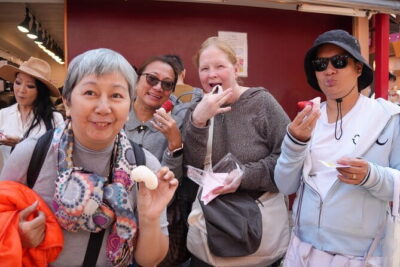
Tokyo Morning Tour : Meiji Shrine, Asakusa and Fish Market
Read our review →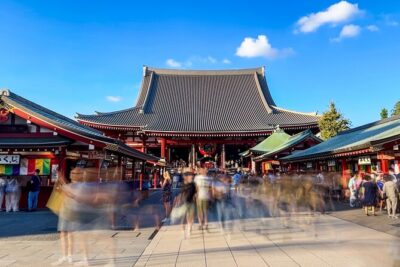
Full Tokyo: Meiji Shrine, Imperial Palace, Asakusa & Skytree
Read our review →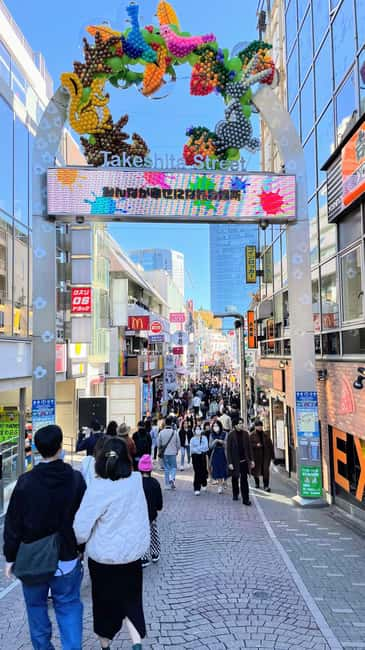
Meiji Jingu, Harajuku, Shibuya, and Shijuku Tour
Read our review →Browse the lists this tour appears in