
Reviewed · MEIJI SHRINE TOURS
Tokyo: Harajuku Meiji Shrine to Shibuya Crossing Guided Tour
Meiji Jingu’s quiet forest paths and Shibuya’s famous crossing make an unusually good pair: this two-hour walk shows you two very different sides of Tokyo without asking you to plan the route yourself. The shrine is especially known for New Year visits, while the walk ends amid the movement and bright signs of Shibuya.
I like that a guide explains shrine customs as you go, including how to make a wish, and that the route includes a Japanese-style crepe stop on Takeshita Street. I also like the small-group limit of 10, which leaves room to ask questions. One consideration: the tour is brief, and the crepe is not listed as included, so you may want to budget extra and allow more time to explore Harajuku or Shibuya afterward.
At a glance
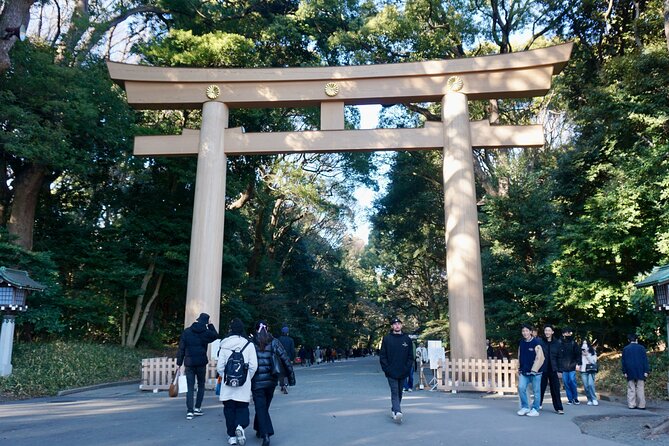
- Meiji Jingu comes first: Hear about the shrine’s origins and how to visit respectfully, with an omikuji fortune paper included.
- Harajuku brings a change of pace: Walk Takeshita Street and stop to try a Japanese-style crepe.
- Shibuya supplies the finale: Take group photos at the Scramble Crossing, then hear the story behind the Hachiko statue.
- The group stays small: No more than 10 participants join the English-language tour.
- Plan around the short duration: The guided experience lasts two hours and costs $78 per person.
From Harajuku Station into Meiji Jingu
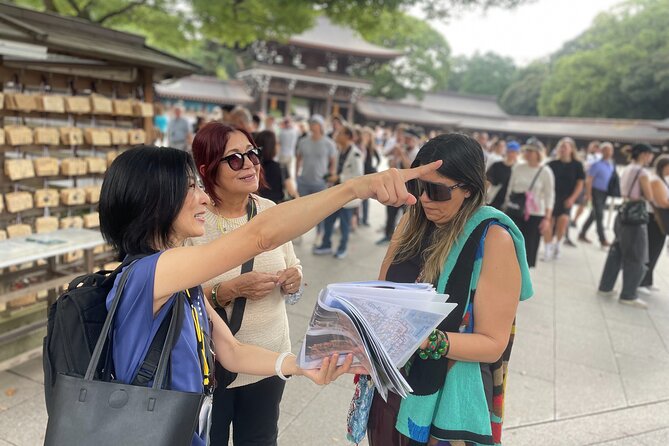
The meeting point is the west exit of JR Harajuku Station. Look for a guide holding a sign that says gotcha. That clear landmark matters at a busy station: arrive with enough time to find the exit and spot the sign before the tour begins.
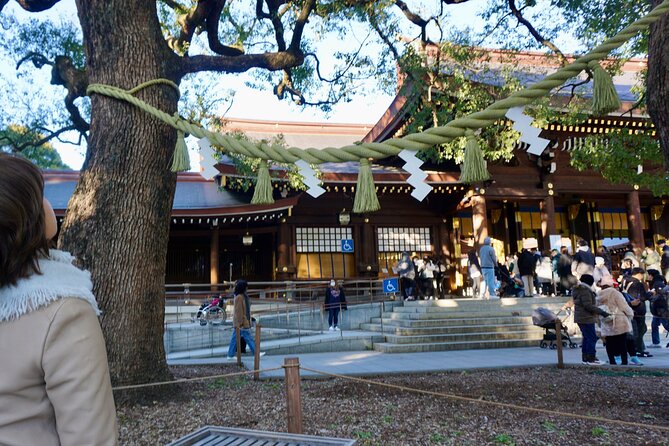
From there, the route starts at Meiji Jingu, a shrine known for drawing especially large crowds for Hatsumode, the first shrine visit of the New Year. It is a striking opening to a walk that later reaches some of Tokyo’s most recognizable city streets. The contrast is part of the appeal: you begin with a place associated with tradition and quiet, then head toward the lively Harajuku and Shibuya districts.
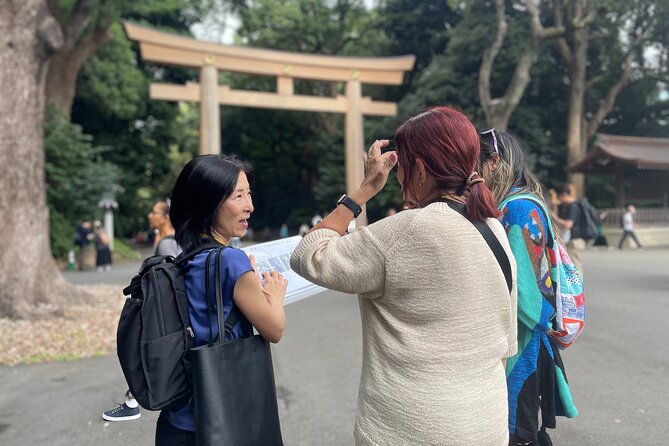
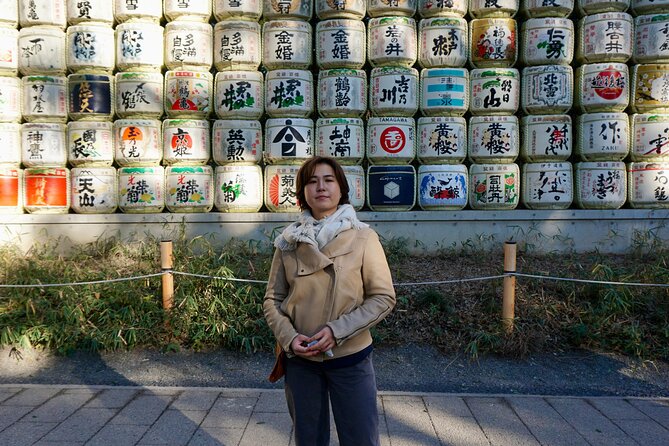
Your guide explains the shrine’s origins and how to visit. That practical framing is useful if this is your first shrine visit in Japan. Instead of simply walking through a beautiful setting, you have someone to explain the customs and answer questions along the way. Past guides have included Shigure-san and Masahito, both praised for making time for questions and explaining Japanese culture clearly. Your guide may differ, so treat those names as examples rather than a promise.
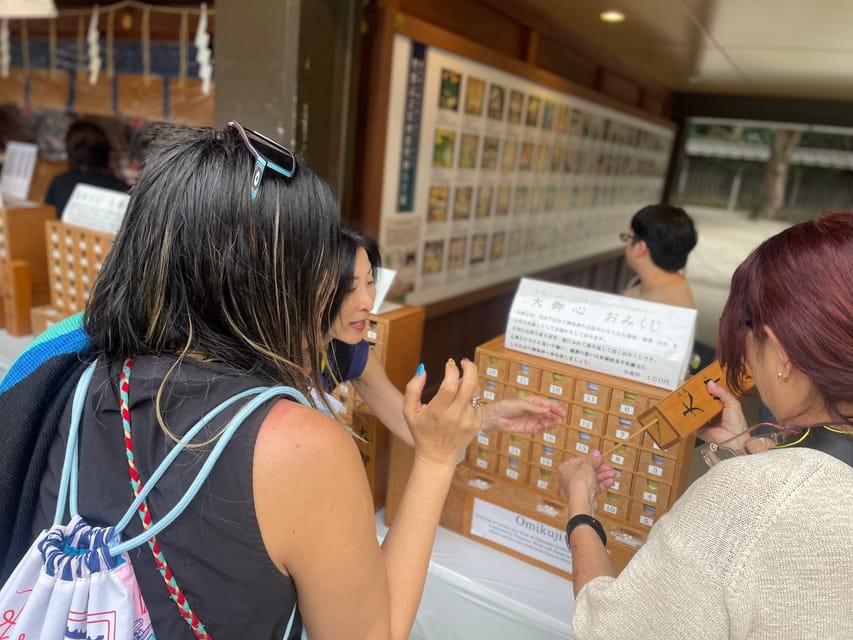
The tour includes an omikuji, a fortune paper. It gives you a small, hands-on way to take part in a shrine custom, rather than only hearing about one. The experience is brief, but the guide’s explanation can help make the ritual feel less mysterious and more meaningful.
Meiji Jingu is a place to take your time, but this is a compact tour, not a long shrine visit. If you want an extended wander or a quiet stretch on your own, consider returning after the guided walk. The two-hour schedule has several stops to cover, so it is best to think of the shrine visit as an introduction rather than a complete exploration.
More Shibuya tours in Tokyo:
- Official Street Go-Kart in Shibuya
★ 5.0 · 3,435 reviews - Tokyo: Street Kart Experience in Shibuya
★ 4.9 · 1,484 reviews - Shibuya Meltdown Nightlife Tour: All-You-Can-Drink Bar Hopping
★ 5.0 · 1,058 reviews
Takeshita Street and the Japanese-style crepe stop
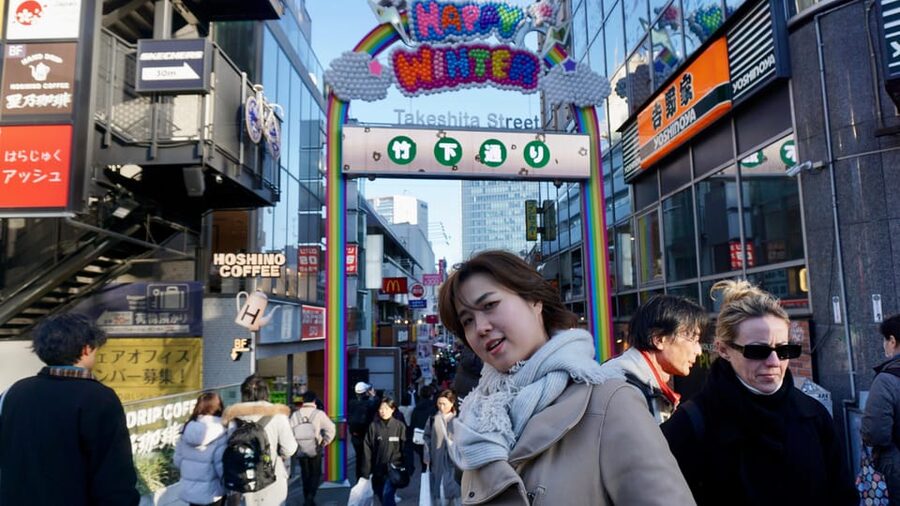
After the shrine, the tour heads into modern Harajuku and along Takeshita Street. The shift is sharp: you move from the shrine’s calm setting into a street known for its youthful energy and distinctive shops. That change helps make the route more than a standard sightseeing walk. It offers a quick look at two very different moods in one part of Tokyo.
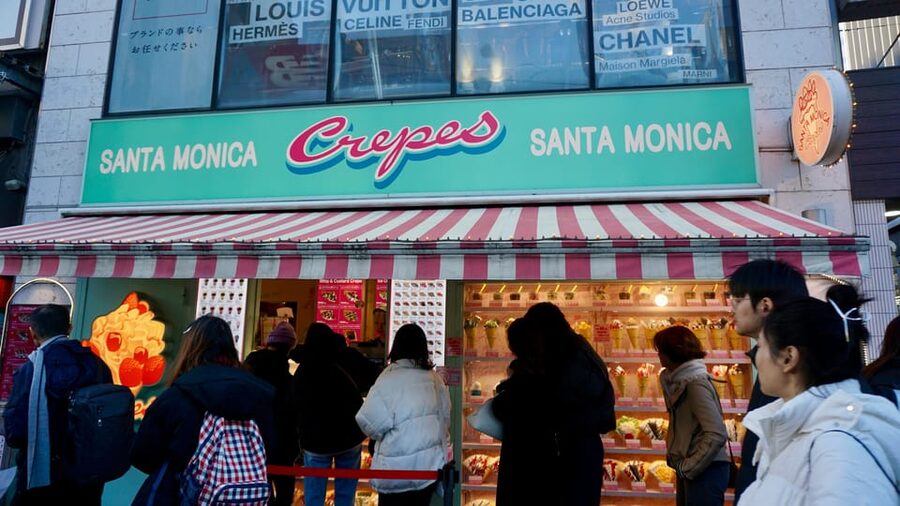
A Japanese-style crepe is the planned treat here. It is a simple but useful pause in the route, and a chance to try a familiar Japanese street snack in the place where it fits naturally. The tour information does not say that the crepe is included in the $78 price, so plan to pay for it separately. If you have food allergies or dietary needs, ask the guide or the vendor about ingredients before ordering; no specific menu or dietary options are promised.
Takeshita Street can be a busy place, and the tour is not designed to give you hours for browsing. That is the trade-off for covering several highlights in two hours. You get an introduction and a food stop, but if shopping or people-watching is high on your list, keep some free time after the tour rather than expecting to fit everything into the guided portion.
The guide’s presence can be especially helpful here because the group moves through a popular area before continuing toward Shibuya. You can focus on the street and the snack instead of having to work out the route yourself. Still, this is a walking tour: wear shoes you are comfortable walking in and be ready to keep pace with the group.
Shibuya Crossing, Hachiko, and the final photo
The route continues to Shibuya, where the Scramble Crossing provides the big-city counterpoint to the shrine. The crossing is famous for the flow of people moving through it from several directions, and the tour sets aside time for group photographs against that backdrop. You will also finish at a scenic vantage point overlooking the crossing, giving you another chance to take in the scene before the tour ends.
A guided stop is useful here because a photo is only part of the experience. Your guide can help position the group for pictures and bring context to a place that can otherwise feel like a quick stop for a snapshot. Do not expect a long photography session, though. The tour is two hours total, and the crossing is one part of a route that also includes the shrine, Takeshita Street, and Hachiko.
The Hachiko statue adds a more personal note to the Shibuya section. Your guide tells the sad story behind the dog remembered as a symbol of loyalty. Knowing the story gives the statue more meaning than a brief photo stop, particularly if you have heard of Hachiko but do not know why the statue is there.
The tour ends with a farewell overlooking the crossing. That finish makes sense: after moving from a shrine to Harajuku’s street scene, you end with the energy of central Shibuya in view. If you want to stay in the area afterward, you can make your own plans, but the guided experience itself concludes there.
What the guide adds to the route
The route’s stops are well known, so the main value is not discovering an obscure corner of Tokyo. It is having a local guide connect the places and explain details you might miss on your own. At Meiji Jingu, that means learning about the shrine’s origins and customs. At Hachiko, it means hearing the story behind the statue. In between, the guide keeps the walk moving and gives you a point of contact for questions.
That personal element comes through in the praise given to guides such as Shigure-san and Masahito. Visitors have valued warmth, detailed explanations, and a pace that allowed time for questions. One person specifically appreciated learning how to make a wish at the shrine. Those are practical strengths for a first-time visitor who wants more than a list of landmarks.
The group is limited to 10 people, which is small enough to make conversation more manageable than on a large coach tour. It does not guarantee one-on-one attention, and the experience still follows a group route. But with a guide who welcomes questions, the small cap is a useful feature rather than just a line in the tour description.
The tour is offered in English. If you are hoping to ask about Japanese customs, or want help understanding the places you pass, that shared language makes the short walk more useful. Just keep in mind that the guide’s individual style may vary. The named guides are examples of people who have led the experience, not a guarantee of who will be there on your date.
More Harajuku tours in Tokyo:
- Tokyo Go-Kart Tour Shibuya-Harajuku-Shinjuku (*IDP Required)
★ 5.0 · 217 reviews - Tokyo: Guided Go Kart Tour from Harajuku to Shibuya Crossing
★ 4.5 · 166 reviews - Shibuya & Harajuku: Hidden Gems & Highlights Private Tour
★ 4.7 · 139 reviews - Harajuku Kawaii Fashion and Pop-Culture Tour
★ 5.0 · 94 reviews
Is $78 a good value for two hours?
At $78 per person, this is not the cheapest way to walk between Harajuku and Shibuya. You can visit public streets and the shrine independently. The price is mainly paying for a small-group guide, an English-language explanation of the shrine and its customs, the route between the stops, and the included omikuji fee.
For a first visit to Tokyo, I think the value is strongest if you want a short orientation and cultural context without organizing the route yourself. You cover Meiji Jingu, Takeshita Street, the crossing, and Hachiko in one guided outing. That is a lot of variety for two hours, and the guide’s explanations are the part you cannot get simply by walking the same route alone.
The value is less compelling if you prefer to explore slowly, shop at length, or spend a long time at the shrine. You may get more from visiting the stops independently and keeping the $78 for food or other activities. Remember, too, that the crepe is not listed among the included items, so leave room in your budget for it.
The booking terms offer flexibility: you can reserve now and pay later, and cancel up to 24 hours in advance for a full refund. Starting times depend on availability, so check the schedule that fits your day. The tour’s short length also makes it easier to pair with other plans, provided you leave yourself enough time to reach the meeting point.
Who should book this walk?
This tour suits first-time visitors who want a guided introduction to Harajuku and Shibuya, especially if shrine customs are new to you. It is also a good fit if you like having a local to answer questions and prefer a compact walk with clear highlights rather than a full-day commitment.
You may find it particularly worthwhile if you want both a traditional setting and modern Tokyo in the same outing. The route makes that contrast its central strength. Families and small groups may appreciate the manageable duration, though the tour details do not specify age requirements or accessibility information, so check directly if either matters for your plans.
If you already know these neighborhoods well, or want plenty of time to shop, eat, and explore independently, you may be better off walking the route on your own. The guided visit is best understood as a focused introduction, not a deep exploration of every stop.
Should you book it?
Book this tour if you want a well-paced, English-language introduction to Meiji Jingu, Harajuku, and Shibuya, with shrine context and a guide to connect the stops. The most useful parts are the explanations of customs and the opportunity to ask questions in a small group.
Skip it if you want an unhurried day or are mainly interested in shopping and food. Two hours goes quickly, and the crepe is an extra expense. For many first-time visitors, though, the route makes a sensible start: you get a taste of shrine tradition, a Harajuku snack stop, and a close-up look at Shibuya’s famous crossing, all with a local guide to help you make sense of it.
FAQ
How long is the tour?
The tour lasts two hours.
What is the price?
The listed price is $78 per person.
Where does the tour meet?
Meet at the west exit of JR Harajuku Station. The guide waits there with a sign that says gotcha.
What language is the tour in?
The live tour guide speaks English.
How large is the group?
The small group is limited to 10 participants.
Is the omikuji fortune paper included?
Yes. The omikuji fee is included in the tour price.
Is the Japanese-style crepe included?
The crepe is not listed as an included item, so plan for it to be an extra expense.
Which places does the tour visit?
The route includes Meiji Jingu Shrine, Takeshita Street, Shibuya Scramble Crossing, and the Hachiko statue.
Can I cancel for a refund?
Yes. You can cancel up to 24 hours in advance for a full refund.
Do I have to pay when I reserve?
No. The reserve-now, pay-later option lets you book without paying at the time of reservation.
More Meiji Shrine visits in Tokyo
- Tokyo: Meiji Shrine, Asakusa, Skytree Bus Tour and Cruise
★ 4.7 · 1,986 reviews - Tokyo Panoramic 1 Day: Meiji Shrine, Asakusa, Odaiba and SKYTREE®
★ 4.5 · 1,222 reviews - Tokyo: Meiji Shrine Walking Tour — Shinto & Imperial System
★ 4.9 · 266 reviews - Tokyo: Meiji Jingu Shrine and Shinto Culture Walking Tour
★ 5.0 · 245 reviews
Freshly reviewed in Tokyo
- Tokyo: Toshimaya Sake Brewery Tour with Sake Tasting★ 5.0 · 6 reviews
- :Tokyo,Shibuya /Meiji Shrine tour in KIMONO/English-friendly★ 5.0 · 4 reviews
- Tokyo: Tour Privado por Tokio en español★ 4.3 · 4 reviews
- Tokyo:Tea ceremony experience at Komaba Warakuan★ 4.8 · 9 reviews
- :Tokyo,Shibuya/ Pro Photography in Kimono / English-Friendly★ 5.0 · 26 reviews
- Tokyo:Samurai Training : Swords, Bushido & Mental Discipline★ 5.0 · 6 reviews
- Tokyo:Mt Fuji & Hakone Day Tour with English Speaking Driver★ 5.0 · 26 reviews
- Tokyo:Nikko UNESCO World Heritage Sites Private 1-Day Tour★ 3.8 · 6 reviews
Meiji Shrine Tours, compared.
Meiji Shrine, Asakusa, Skytree Bus Tour and Cruise
Read our review →
Tokyo Panoramic 1 Day: Meiji Shrine, Asakusa, Odaiba and SKYTREE®
Read our review →
Meiji Shrine Walking Tour — Shinto & Imperial System
Read our review →
Meiji Jingu Shrine and Shinto Culture Walking Tour
Read our review →
1 Day Bus Tour with Meiji-Jingu,Odaiba,lunch&Skytree
Read our review →
Tokyo Morning Tour : Meiji Shrine, Asakusa and Fish Market
Read our review →
Full Tokyo: Meiji Shrine, Imperial Palace, Asakusa & Skytree
Read our review →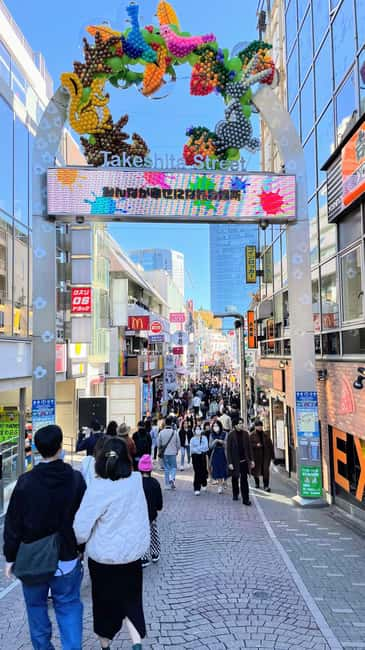
Meiji Jingu, Harajuku, Shibuya, and Shijuku Tour
Read our review →Browse the lists this tour appears in