
Reviewed · TOKYO FOOD TOURS
Tokyo Food Tour: The Past, Present and Future 11+ Tastings
Tokyo’s food story makes an unusually good walking route: start with the ingredients behind classic Japanese cooking, eat like a salaryman near the railway tracks, then see how Akihabara markets traditional snacks to younger customers. It is a tour built around food, but the neighborhoods explain why the dishes changed.
I like two things about this plan: the range of tastings, from kombu simmered in soy to fruit sandwiches and curry udon, and the small-group limit of eight, which gives a guide room to explain the food as you go. Guides named Paiva and Miko have been praised for their cultural knowledge and pleasant manner, though you cannot count on a particular guide for your date.
The main consideration is the physical effort. You will walk about 6.5 km, use subway stations with many stairs, and need to pay for two subway rides separately. The tour is not suitable for wheelchair users, people with mobility impairments, vegetarians or vegans.
At a glance: Tokyo in 11 or more tastings
- Nihonbashi’s old food shops: Sample classic flavors such as kombu tsukudani, amazake, imo kenpi and daifuku.
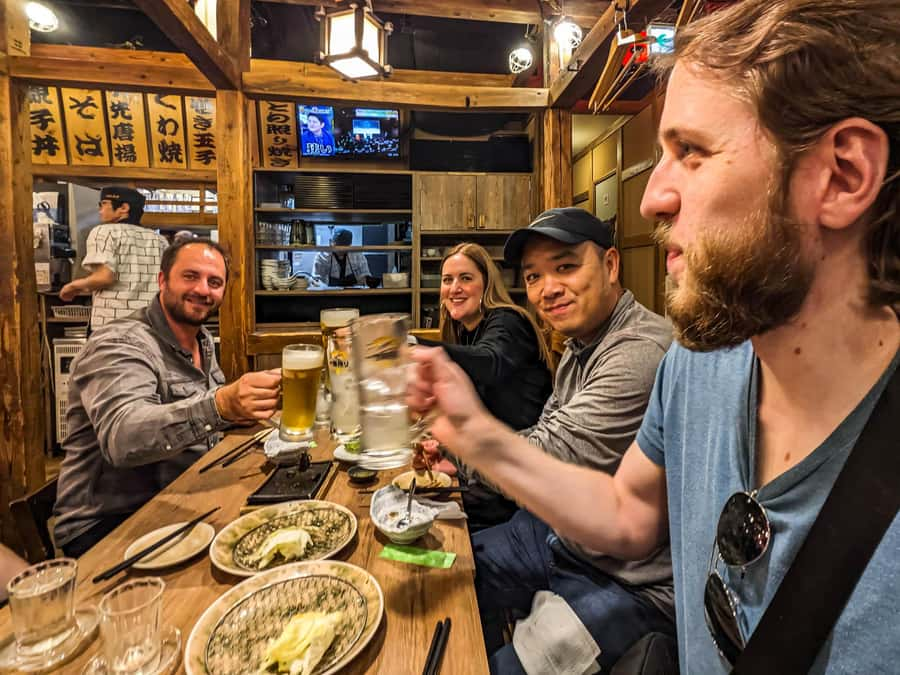
- Salaryman dining in Yurakucho: Try chicken dishes, a Japanese sour and curry udon near the railway tracks.
- Tokyo Station’s gift culture: Learn why food gifts matter in Japan while tasting a fruit sandwich.
- Akihabara’s snack marketing: See how familiar Japanese treats are presented to a younger, technology-minded audience.
- A small group or private format: Join a group capped at eight, or book a private tour for your party.
- A long half-day on foot: Allow 5.5 to 6.5 hours, plus a moderate walk and two subway fares.
Nihonbashi: tasting the foundations of Japanese cooking
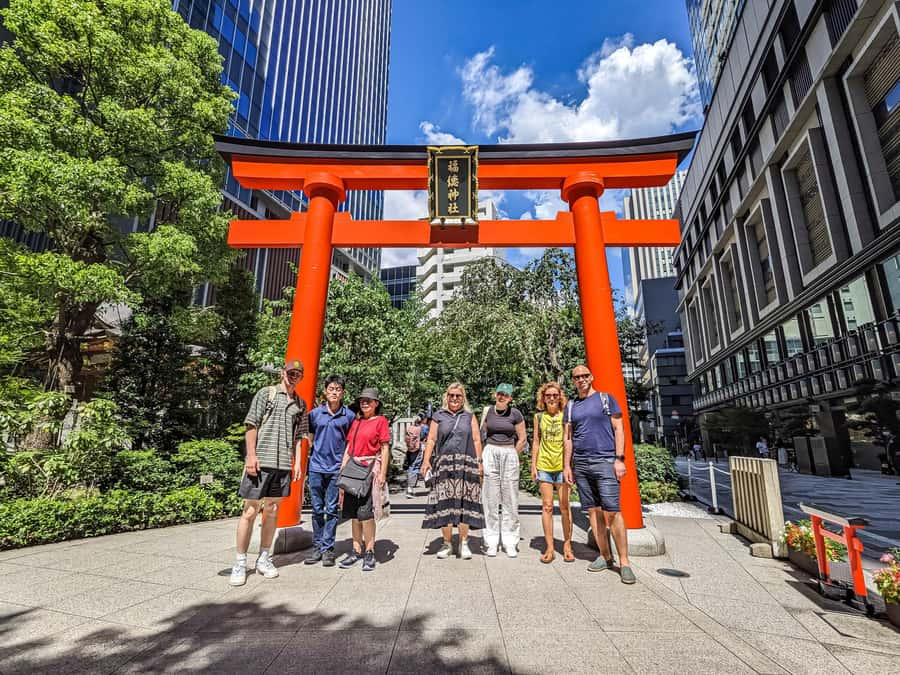
The tour begins in Nihonbashi, a fitting place to look at the ingredients behind Japan’s everyday food. The first part focuses on dashi, the savory stock used in many dishes, and its key building blocks: katsuobushi, or dried bonito, and kelp. Understanding those ingredients gives you a useful frame for later tastings, even if you have already eaten Japanese food many times.
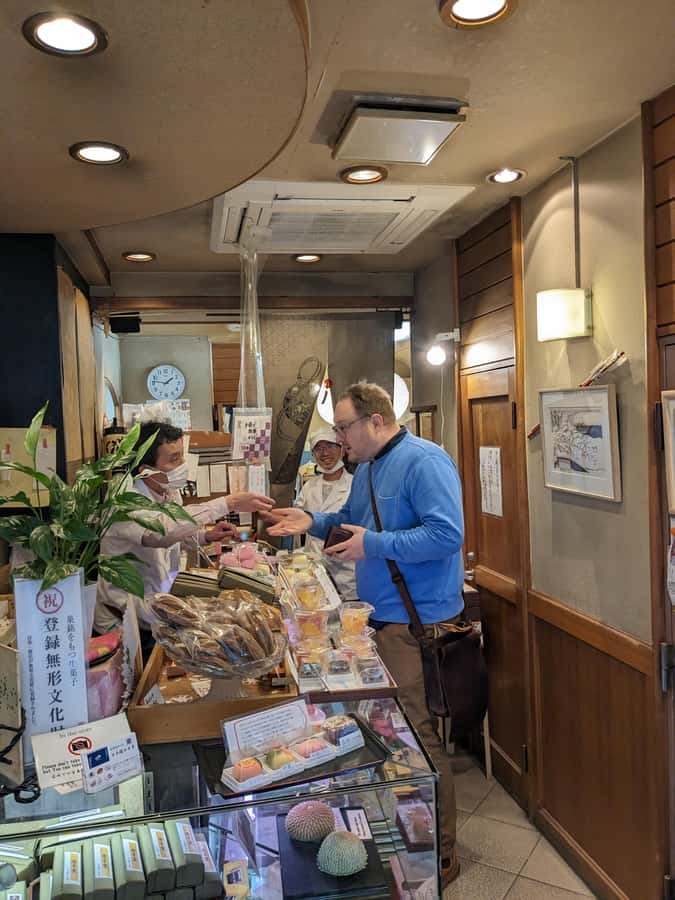
You will sample kombu tsukudani, kelp simmered until tender and seasoned, along with amazake, a fermented rice drink. The tasting list also includes imo kenpi, sweet potato chips, and daifuku mochi, soft glutinous rice cakes with a sweet filling. These are not just a string of snack stops: they offer a quick introduction to the contrasting flavors and textures found in Japanese food, from savory and salty to sweet and chewy.
Some of the shops visited are more than a century old. That can make this section especially worthwhile if you want to connect a dish to the kind of small, long-running food business that keeps old methods in everyday circulation. You are not simply hearing about national cuisine in the abstract; you are tasting products selected from shops with their own place in the city’s food culture.
The stop lasts about 105 minutes, so there is time for explanation and tasting rather than a quick dash through the district. Still, the exact samples and portions are not specified. Treat the 11-plus tastings as a broad sampling experience, not a promise of 11 full meals.
More food tours in Tokyo:
- Tokyo: Shinjuku Food Tour (13 Dishes at 4 Local Eateries)
★ 5.0 · 6,603 reviews - Tokyo: Shinjuku Food Tour (15 Dishes and 4 Eateries)
★ 4.9 · 2,033 reviews - Best of Shinjuku: Izakaya Food Tour (4 Stops, 14+ Tastings)
★ 5.0 · 1,863 reviews
Ginza and Yurakucho: dinner beneath the railway tracks
From Nihonbashi, the route takes a short subway ride toward Tokyo Station, followed by a walk to Yurakucho. The planned subway ride is about 15 minutes, and you will need to buy your own ticket. This change of pace helps the tour tell its larger story: Tokyo’s food is shaped not only by old traditions, but also by modern work and city life.
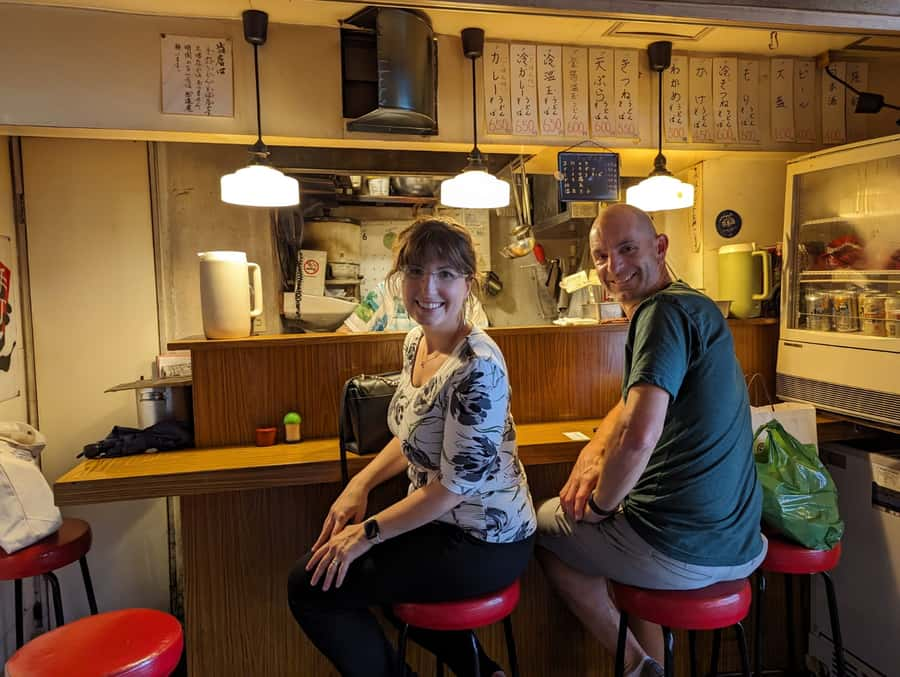
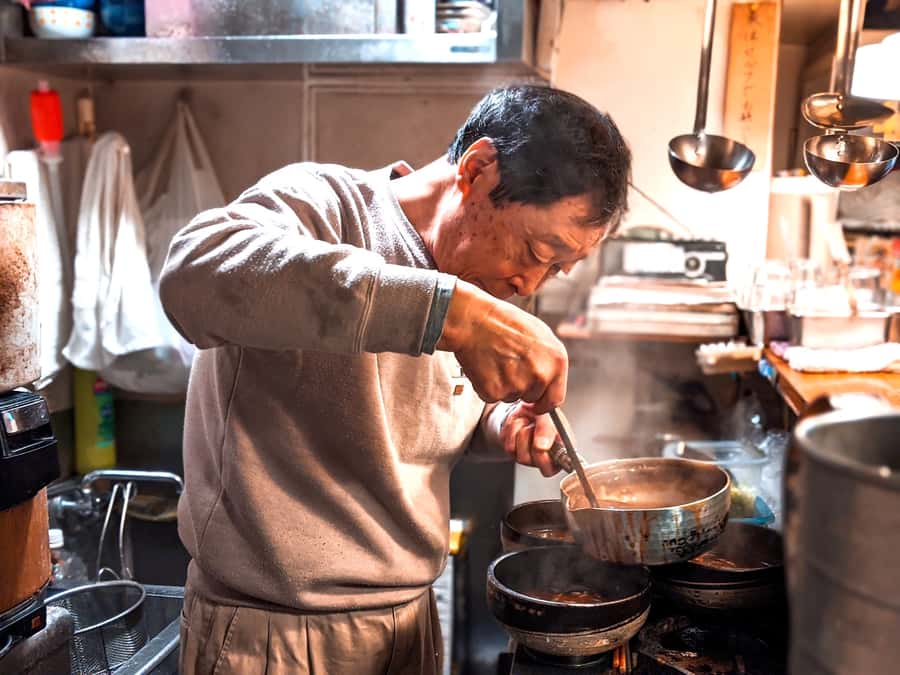
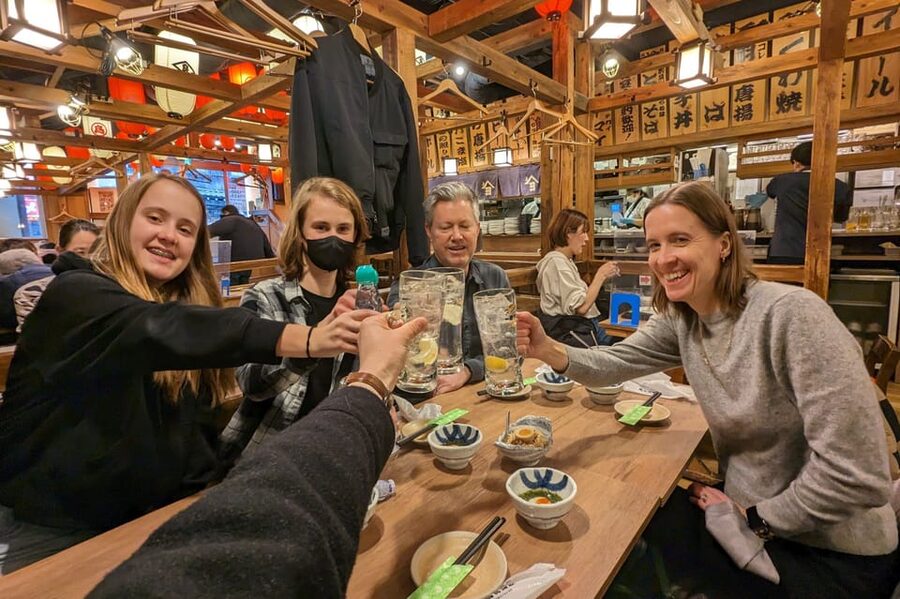
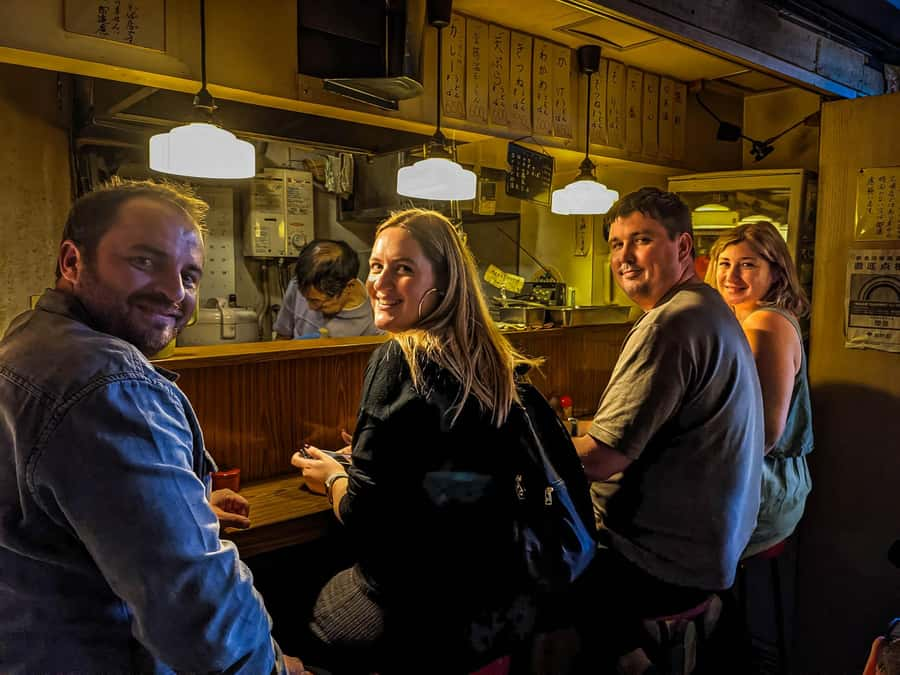
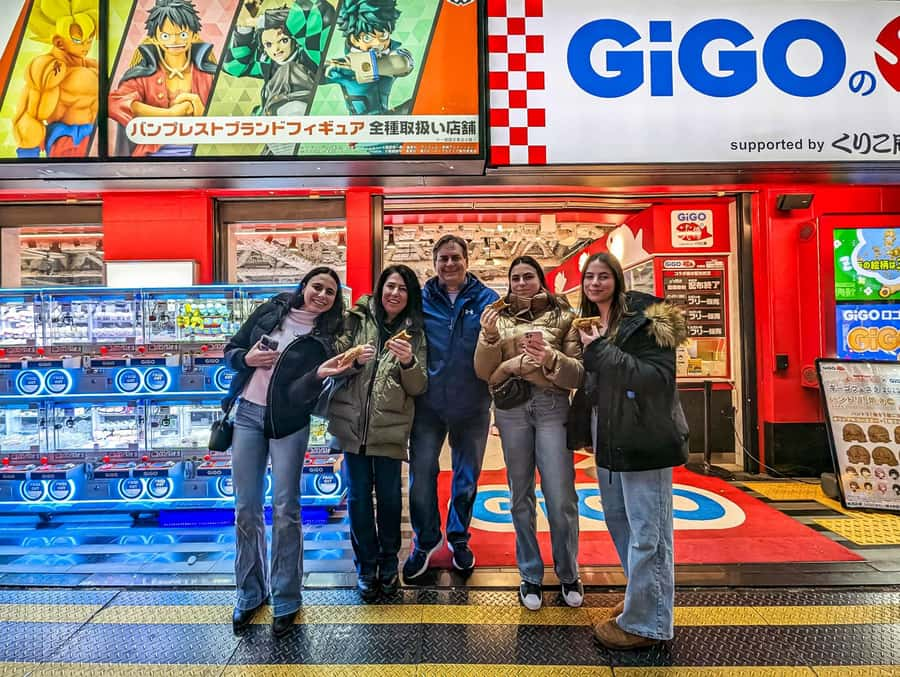
In Yurakucho, the focus turns to the eating habits of salarymen, Japan’s white-collar workers. You will visit an izakaya and a noodle stall tucked beneath railway tracks, and taste common chicken dishes, a Japanese alcoholic drink called a sour, and curry udon. The setting gives these foods context: they are presented as part of everyday dining, rather than as special-occasion cuisine.
Curry udon is a particularly useful marker of change. The tour connects it to the postwar industrial era and the modern tastes that grew alongside it. That historical thread makes this stop more than a chance to eat noodles. You can see how Japanese cooking absorbs outside influences and makes them feel at home.
One alcoholic drink is included. If you do not drink alcohol, the tour details do not say whether a substitute is available, so ask before booking rather than assuming. The meal stop lasts about an hour. You should also avoid treating the food list as a dietary guarantee: the tour is explicitly unsuitable for vegetarians and vegans.
Tokyo Station: a fruit sandwich and the culture of giving
At Tokyo Station, the tour shifts from workplace dining to the role food plays in travel and gift-giving. You will taste a fruit sando, a Japanese milk-bread sandwich filled with fresh fruit and whipped cream, while learning about the social meaning of food gifts. It is a lighter, sweeter stop after the more savory fare in Yurakucho.
Tokyo Station is also a natural place to discuss the connection between food and Japan’s bullet trains. The tour uses the station to show how food travels with people and how gifts become part of the travel experience. That context can help you notice the difference between buying something to eat now and choosing a food item to take to someone else.
The station visit is scheduled for about an hour and includes sightseeing as well as tasting. If you are hoping for a long, independent look around, keep in mind that this is one stop in a guided route, not a free block of time. The value is in having the station’s food and gift customs explained alongside the sample.
Akihabara: traditional snacks with a modern sales pitch
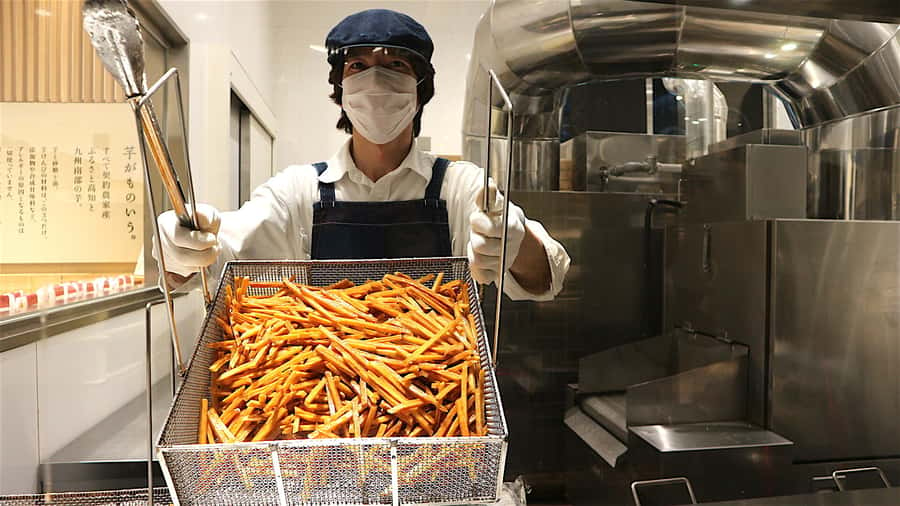
A second short subway ride, about 10 minutes, takes you to Akihabara. Here the subject is how traditional snacks are packaged and marketed to appeal to younger generations. Akihabara is known for electronics, anime culture and technological innovation, so it gives the tour a distinctly different setting from the older shops of Nihonbashi.
You will try a selection of snacks and discuss the role of marketing in keeping familiar foods visible to new audiences. The point is not that traditional food has been replaced by novelty. Rather, the tour looks at how old products can be presented in new ways, in a district associated with technology and changing subcultures.
This final stop helps complete the route’s past-present-future theme. Nihonbashi introduces foundational ingredients and long-running shops; Yurakucho shows food shaped by modern working life; Tokyo Station links food with travel and gifts; Akihabara considers how food is sold to the next generation. That structure gives the tasting tour a clear idea behind it.
The route details name Akihabara Station as the finish, while the activity information also says the tour ends back at the meeting point. Those details do not match, so confirm the actual end point before booking, especially if you have onward plans.
More food and drink experiences in Tokyo:
- Tokyo Tsukiji Fish Market Food and Culture Walking Tour
★ 5.0 · 3,184 reviews - Tokyo: Tsukiji Fish Market Food and Walking tour
★ 5.0 · 1,724 reviews - Eat and Drink Like a Local: Tokyo Ueno Food Tour-Taverns&Ramen
★ 5.0 · 957 reviews - Tokyo: Shibuya Food Tour (13 dishes and 4 Eateries)
★ 5.0 · 770 reviews
What the $164 price gets you
At $164 per person, this is not a cheap way to grab a meal. You are paying for more than a collection of snacks, though: the price includes 11 or more tastings, one alcoholic drink, a guide, and a route linking four distinct food contexts across Tokyo. The guide’s explanations are a meaningful part of the value, especially if you want to understand why dashi matters or how curry udon reflects changing tastes.
The group format also matters. A maximum of eight people keeps the tour smaller than a large coach outing, and a private option is available if you want the experience limited to your own friends or family. A private tour may suit you if you need a more flexible pace, but the supplied details do not promise any particular changes to the route or timing.
Budget separately for the two subway rides. Hotel pickup and drop-off are not included unless you book a private tour with a hotel meet-up, and even then you travel to the tour start by public transport at your own cost. The listing gives the tour duration as 5.5 to 6.5 hours, so this is a substantial half-day commitment rather than a quick tasting walk.
It is hard to judge the price by counting samples alone because portion sizes are not specified. If you value a guided introduction to food and neighborhoods, the range and context may justify the cost. If you mainly want a large lunch, or prefer to choose each restaurant yourself, you may get better value by eating independently.
Pace, meeting point and practical planning
This is a walking tour of about 6.5 km, or four miles, at a reasonable group pace. You will also use subway stations with many stairs. Wear comfortable shoes and clothes, bring a towel and a reusable water bottle, and plan for the tour to go ahead in rain or shine.
The listed meeting point is Nihonbashi Subway Station Exit B12. When you reach the exit, stay inside the shopping mall at basement level and look for a bench on the right. Do not go up to street level. If arriving by taxi, the stated drop-off is Coredo Nihonbashi; use the elevator by the entrance to reach the bench area.
English, Japanese and Portuguese are available as tour languages. Hotel meet-up is optional only for a private booking, and you are asked to provide your hotel name and address when booking. For a hotel meet-up, wait in the lobby 10 minutes before the scheduled start.
The tour requires at least two bookings to run, so a solo booking may be canceled and refunded if it is the only signup. You can cancel up to five days in advance for a full refund. These points are worth checking before you build the rest of your day around the tour.
Who should book this food tour?
I would put this tour high on the list if you want more than a restaurant crawl. It suits curious eaters who enjoy learning the story behind a dish, first-time visitors who want a guided route through several Tokyo districts, and repeat visitors who are happy to explore food culture from a different angle. The small-group cap and private option are appealing if you prefer conversation over a crowd.
It is a poor fit if you need step-free access, use a wheelchair, cannot comfortably walk several kilometers, or are vegetarian or vegan. It may also disappoint if your priority is a leisurely meal at one restaurant, since the experience is built around moving between tastings and neighborhoods.
Book it if you want a compact lesson in how Tokyo eats, from traditional ingredients to modern snack marketing, and the walking and dietary limits work for you. Before paying, confirm the finish point and ask about a nonalcoholic alternative if needed. If you want a full meal or have mobility concerns, choose a shorter, more tailored food experience instead.
FAQ
How long does the tour take?
The tour lasts 5.5 to 6.5 hours. Starting times depend on availability.
How many tastings are included?
The tour includes 11 or more food tastings and one alcoholic drink.
Which Tokyo areas does the route visit?
It covers Nihonbashi, Tokyo Station, Yurakucho and Akihabara.
How far will I walk?
Expect to walk about 6.5 km, or four miles, at a moderate pace.
Are subway fares included?
No. There are two short subway rides, and you need to buy your own tickets.
What languages are available?
The tour is offered in English, Japanese and Portuguese.
Can I book a private tour?
Yes. You can choose a private tour or join a small group with a maximum of eight people.
Is the tour suitable for vegetarians or vegans?
No. The tour is listed as unsuitable for both vegetarians and vegans.
Is the tour wheelchair accessible?
No. It is not suitable for wheelchair users or people with mobility impairments, and the route includes many subway stairs.
Where does the tour start and finish?
The start point is Nihonbashi Subway Station Exit B12, at a bench inside the shopping mall at basement level. The route details name Akihabara Station as the finish, while the activity information also says it ends back at the meeting point, so confirm the final stop before booking.
More food experiences in Tokyo
- Tokyo Night Foodie Tour in Shinjuku – Seasonal Sushi, Wagyu Beef
★ 5.0 · 1,161 reviews - Tokyo: Tsukiji Fish Market Food and Culture Walking Tour
★ 4.7 · 757 reviews - Tsukiji Fish Market: Street Food & Culture Walking Tour
★ 5.0 · 669 reviews - Tsukiji Fish Market Small-Group Food Walking Tour
★ 5.0 · 621 reviews
Freshly reviewed in Tokyo
- Tokyo: Toshimaya Sake Brewery Tour with Sake Tasting★ 5.0 · 6 reviews
- :Tokyo,Shibuya /Meiji Shrine tour in KIMONO/English-friendly★ 5.0 · 4 reviews
- Tokyo: Tour Privado por Tokio en español★ 4.3 · 4 reviews
- Tokyo:Tea ceremony experience at Komaba Warakuan★ 4.8 · 9 reviews
- :Tokyo,Shibuya/ Pro Photography in Kimono / English-Friendly★ 5.0 · 26 reviews
- Tokyo:Samurai Training : Swords, Bushido & Mental Discipline★ 5.0 · 6 reviews
- Tokyo:Mt Fuji & Hakone Day Tour with English Speaking Driver★ 5.0 · 26 reviews
- Tokyo:Nikko UNESCO World Heritage Sites Private 1-Day Tour★ 3.8 · 6 reviews
Tokyo Food Tours, compared.
Shinjuku Food Tour (13 Dishes at 4 Local Eateries)
Read our review →
Best of Shinjuku: Izakaya Food Tour (4 Stops, 14+ Tastings)
Read our review →
Tokyo Night Foodie Tour in Shinjuku – Seasonal Sushi, Wagyu Beef
Read our review →
Eat and Drink Like a Local: Tokyo Ueno Food Tour-Taverns&Ramen
Read our review →
Tsukiji Fish Market: Street Food & Culture Walking Tour
Read our review →
Tokyo Food Tour Taste Fresh Delights at Tsukiji Market
Read our review →Browse the lists this tour appears in