
Reviewed · KAMAKURA TOURS
Kamakura Half Day Walking Tour with Local Experience
Kamakura’s appeal comes into focus on the ride in: first a train from Shinjuku, then the Enoden, a small coastal railway that runs along the Pacific shore. At Hase-dera, the Great Buddha, and Tsurugaoka Hachimangu, you get a useful introduction to the temples and samurai story that shape the city.
I like that the trip combines coastal train travel with three major Kamakura sights, and that your guide handles the route from Tokyo rather than leaving you to puzzle out the connections. I also like the chance to try a local snack or drink, with up to 500 yen included.
The main consideration is the length and pace: this is a 330-minute outing with about three kilometers of walking, not a quick hop out of Tokyo. And one traveler had trouble finding the Shinjuku meeting point, so check the directions carefully and keep your phone available.
Key points to know before you go
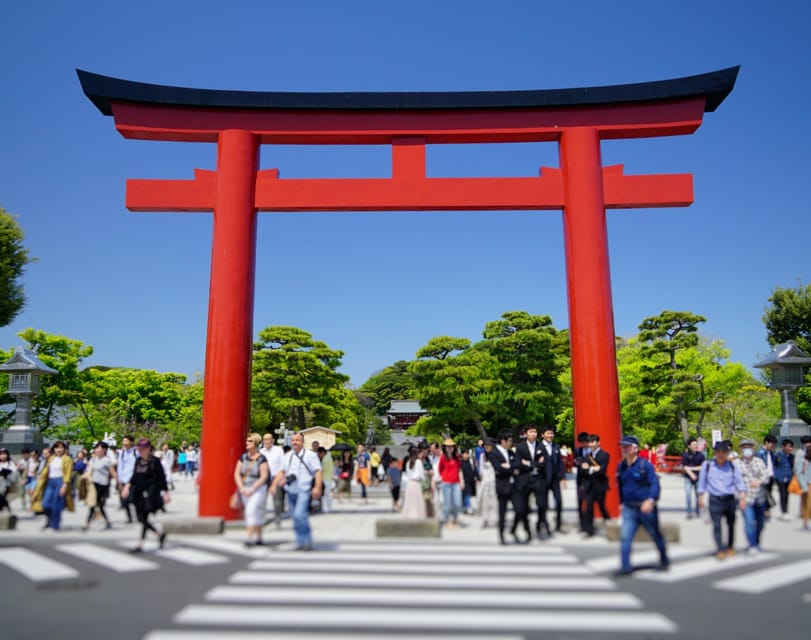
- The Enoden ride is part of the day: You travel from Shinjuku through Fujisawa and then ride the coastal Enoden into the Kamakura area.
- Hase-dera gets the most time: Allow about 45 minutes for its gardens, caves, Buddhist halls, and terrace overlooking the bay.
- The Great Buddha stop is brief: You have about 20 minutes at Kōtoku-in, enough to see the statue up close, but not for a long visit.
- Your tour ends at Tsurugaoka Hachimangu: You can continue exploring Kamakura afterward, with the included pass offering transport options.
- A snack is included, lunch is not: Choose a local snack or drink worth up to 500 yen; plan separately for a meal.
- The meeting point needs care: Look for the Suica Penguin Statue on the second floor of the Shinjuku Expressway Bus Terminal building.
From Shinjuku to Kamakura by train
The day begins at the Suica Penguin Statue on the second-floor pedestrian deck of the Shinjuku Expressway Bus Terminal building, attached to JR Shinjuku Station. You can also reach it from the station’s new south gate. Once the group meets, it is about a five-minute walk to the Odakyu Line terminal.
That meeting arrangement is practical, but Shinjuku is a large station complex, and a vague sense of the general area is not enough. Head for the named statue and plaza, not just the station or bus terminal. The guide may contact you through WhatsApp before the tour. If you do not have the app or receive a message, make sure your phone can accept calls in case the guide needs to find you.
From Shinjuku, you ride the Odakyu Odawara Line toward Fujisawa with the guide. There you change to the Enoden, the Enoshima Electric Railway, which carries you along the Pacific coast toward Kamakura. The journey is a substantial part of this outing: the listed train portion is 110 minutes, so this is not a tour where you spend most of the day at the sights.
I see real value in having the guide manage the rail connections. Tokyo’s trains are efficient, but a day trip involving more than one railway can feel like a lot of navigation before the sightseeing even starts. Here, you can focus on the route and the changing views instead of working out each transfer alone.
The included Odakyu Kamakura-Enoshima Pass covers return transportation from Shinjuku and unlimited Enoden rides until the tour ends. That makes the train more than a simple transfer. The coastal stretch is a highlight in its own right, and the pass gives you flexibility to continue using the Enoden after the guided portion.
More Kamakura trips in Kamakura:
- Tokyo: Kamakura & Enoshima Day Trip including Temple Tickets
★ 4.5 · 1,375 reviews - Tokyo: Mt. Fuji, Kamakura, Big Buddha, & Lake Ashi Day Trip
★ 4.5 · 867 reviews - From Tokyo: Kamakura & Enoshima 1-Day Bus Tour
★ 4.5 · 189 reviews
Hase-dera’s gardens, caves, and bay views
Before reaching central Kamakura, the group visits Hase-dera, often called the temple of flowers. The guided visit lasts about 45 minutes, the longest stop on the itinerary. You can explore the garden, caves, Buddhist halls, and a terrace with a view over the bay.
That variety makes Hase-dera a good opening sight. Rather than seeing only one temple building, you move through several settings and get a sense of how the grounds fit together. The terrace also gives you a pause from the walk and a broader view of the coastal area.
Forty-five minutes is enough to see the main features, but it is not an unhurried visit. If you like to linger over gardens or spend time looking at details, keep an eye on the group’s pace. You are visiting several sites in one day, so the schedule favors a broad introduction over a long, solitary exploration.
The tour includes admission to Hase-dera. Wear comfortable shoes, as the day includes walking between stops and around temple grounds. Photography inside is listed as not allowed; follow any posted restrictions and your guide’s instructions.
Meeting Kamakura’s Great Buddha
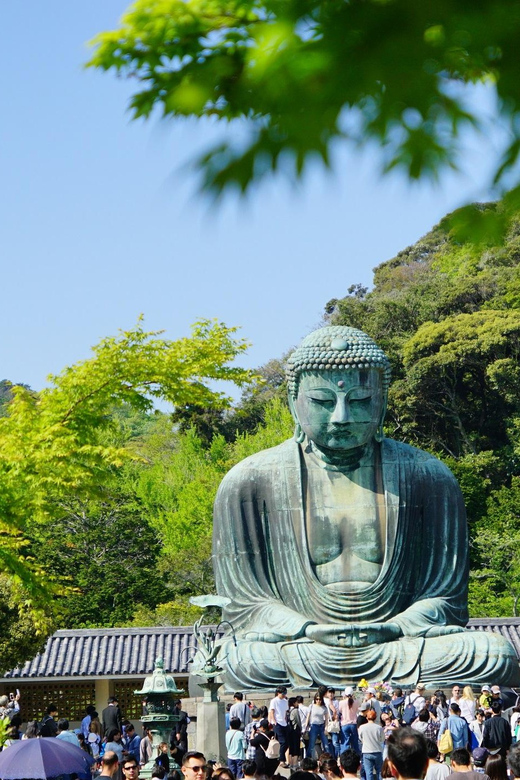
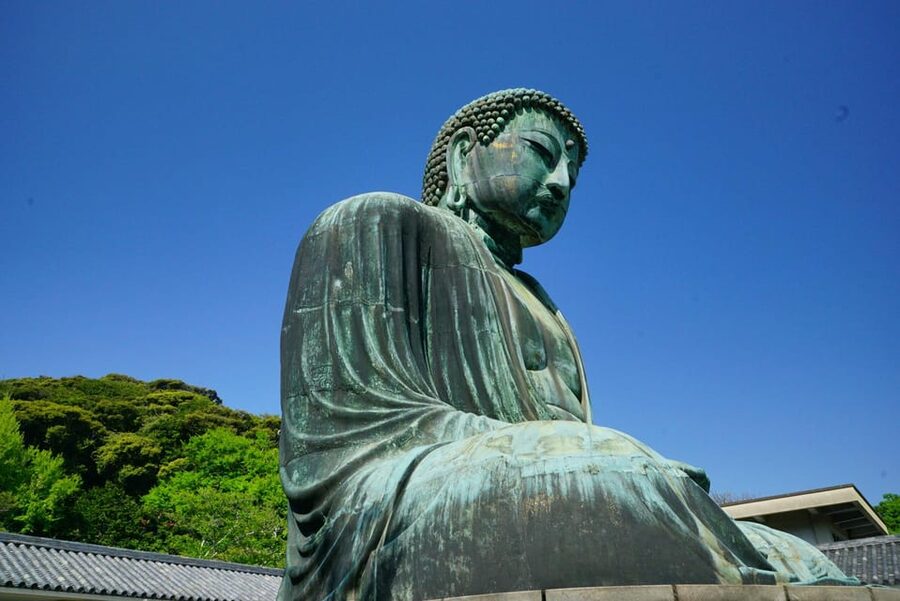
A short walk of about five minutes takes you to Kōtoku-in, home of Kamakura’s famous Great Buddha. The stop is about 20 minutes. That is a compact visit, but it gives you time to stand before the statue and take in its size and details.
The contrast with Hase-dera is part of what makes the sequence work. Hase-dera offers gardens, halls, and varied spaces; Kōtoku-in centers the visit on one monumental figure. If the Great Buddha is a major reason you want to see Kamakura, you will get a close look, though you should not expect a long stretch of free time here.
Admission to Kōtoku-in is included. As at the other temple, keep the rules in mind, including the restriction on photography inside. The tour’s short stop is best suited to someone who wants an overview of the landmark rather than an extended visit.
Komachi Street and a taste of local life
After Kōtoku-in, you walk about seven minutes to the Enoden and ride for roughly 10 minutes toward Kamakura Station. From there, the route continues on foot along Komachi Street, a popular shopping and food street leading toward Tsurugaoka Hachimangu.
The scheduled break is 20 minutes. That is enough for a quick look and a snack, but not a long meal or a leisurely browse. You can choose a local snack or beverage worth up to 500 yen per person, an enjoyable small inclusion that lets you sample something without making a separate plan. Lunch is not included, so bring extra money if you want more than the covered snack or drink.
Komachi Street is a useful change of pace after the temples and rail rides. It gives you a glimpse of modern Kamakura’s everyday visitor scene, with food and shops along the way. It can be busy, so treat the stop as a short break rather than a quiet stretch of the tour.
More walking tours in Kamakura:
- Kamakura Historical Walking Tour with the Great Buddha
★ 5.0 · 129 reviews - Kamakura Walking Tour – The City of Shogun
★ 5.0 · 100 reviews - Kamakura 8 hr Private Walking Tour with Licensed Guide from Tokyo
★ 5.0 · 80 reviews - Kamakura: Half day Walking tour & Japanese sweets
★ 5.0 · 11 reviews
Tsurugaoka Hachimangu and Kamakura’s samurai past
The walk ends at Tsurugaoka Hachimangu, where a guide-led visit lasts about 20 minutes. The shrine is dedicated to a deity of war, and the guide explains its importance to Kamakura’s history and the samurai government.
This final stop helps connect the day’s sights. You have seen Buddhist temples and the Great Buddha; here, the focus shifts to the political and military story associated with Kamakura. The guided explanation is especially useful if you want more than a series of scenic stops, though, again, the time is brief.
The tour ends by the shrine, not back in Shinjuku. You are free to spend the afternoon around Kamakura afterward. Your pass includes return transportation from Shinjuku and Enoden rides, so check your plans before leaving the group and make use of the remaining time if you want to explore further.
What the price includes, and what it does not
At $83 per person, the tour bundles an English- or Spanish-speaking guide from Tokyo to Kamakura, return transport from Shinjuku, entry to Hase-dera and Kōtoku-in, and one local snack or beverage worth up to 500 yen. The value is strongest if you want a guided day trip and would otherwise need to arrange the railway route and temple admissions yourself.
The price also buys a clear structure. You travel with a guide from Shinjuku, visit three major sites, and get context for Kamakura’s religious and samurai heritage. For a first visit, that can make a busy day easier to follow and help you understand what you are looking at.
There are limits. Lunch is extra, the stops are timed, and you may prefer to arrange your own trip if you want to linger at each temple or set your own pace. Private or small-group options are available, but the exact group size is not specified, so check the option you select if group size matters to you.
The guide can shape the day
The most praised part of the experience is the guiding. Silvy was described as timely and patient, and she continued sharing useful information after the formal tour. Romy was praised for being adaptable and for explaining Kamakura’s history and culture while keeping the group engaged.
Those details matter on a trip built around public transport and a packed route. A patient guide can make the meeting and transfers less stressful, while an adaptable one can help the day feel less like a checklist. The reports are not a guarantee of who will lead your departure, but they suggest that strong guiding has been a real strength.
There is also a practical warning. One person could not find the meeting point because the directions they had did not make the landmark clear. The location is specific: the Suica Penguin Statue on the second floor of the bus terminal building. Save that name, allow time to locate it, and keep your phone on. The displayed rating is 3.4 from only four reviews, a small sample with sharply different experiences, so I would give the written comments more weight than the score alone.
Who will enjoy this Kamakura day trip
This tour suits you if you are staying in Tokyo, want to see Kamakura’s main sights in one day, and would rather have a guide manage the rail journey. It is also a good fit if you value historical context and want to combine temple visits with the Enoden’s coastal route and a short taste of Komachi Street.
It is less suitable if you have a low level of fitness or want a slow, flexible day. The tour covers about three kilometers on foot, lasts five and a half hours, and includes several timed stops. In summer, heat and humidity can make the walking feel harder. Bring plenty of water, a wipe, and possibly a change of clothes.
Comfortable shoes are essential. Large bags and luggage are not allowed, and short skirts and loose clothing are also listed as not permitted. The activity is described as wheelchair accessible, but it also involves walking between stops and is not suitable for people with a low fitness level. If you have particular mobility needs, confirm how the route will work for you before booking.
Should you book the Kamakura tour?
Book it if you want a guided introduction to Kamakura, value having the trains and temple entries arranged, and are comfortable with a full half-day of walking and scheduled stops. The Enoden ride, Hase-dera’s varied grounds, and the Great Buddha make a satisfying mix, while the guide can give the sights a historical thread.
Skip it if your priority is lingering at each site, taking a long lunch, or exploring Kamakura at your own pace. If you do book, focus on the exact Shinjuku meeting landmark, travel light, wear comfortable shoes, and plan for lunch separately. That preparation addresses the clearest practical snags and leaves you free to enjoy the coast and the city.
FAQ
Where does the tour meet in Shinjuku?
Meet at the Suica Penguin Statue on the second-floor pedestrian deck of the Shinjuku Expressway Bus Terminal building, attached to JR Shinjuku Station. It is also reachable from the station’s new south gate.
How long is the tour?
The tour lasts 330 minutes, or five and a half hours.
What languages are available?
The live guide is available in English or Spanish.
Which Kamakura sights are included?
The guided route includes Hase-dera, Kōtoku-in and its Great Buddha, Komachi Street, and Tsurugaoka Hachimangu.
Are train tickets and temple admissions included?
Yes. Return transportation from Shinjuku on the Odakyu Kamakura-Enoshima Pass and entry to Hase-dera and Kōtoku-in are included.
Is lunch included?
No. Lunch is not included, though one local snack or beverage worth up to 500 yen per person is included.
How much walking should I expect?
The tour involves approximately three kilometers of walking. Comfortable shoes are recommended, and the activity is not suitable for people with a low level of fitness.
Freshly reviewed in Kamakura
- Tokyo Yokohama Night View Tour With Kamakura And Enoshima★ 3.5 · 14 reviews
- Tokyo: Kamakura & Enoshima Day Tour with Pickup & Train Ride★ 4.1 · 61 reviews
- Tokyo: Kamakura Private Tour With Guide★ 5.0 · 5 reviews
- Tokyo: Day Trip to Kamakura in Spanish – Spanish★ 4.9 · 22 reviews
- Kanagawa: Kimono Rental in Kamakura Provided by RikaWafuku★ 4.8 · 8 reviews
- Private 2-Day Tour: Mt Fuji Hakone & Kamakura + Onsen Ryokan★ 5.0 · 3 reviews
- Kamakura: Great Buddha, Hase Temple, & Komachi Street Tour★ 5.0 · 11 reviews
- Mt Fuji Hakone/Enoshima Tour:Optional Ropeway/Lake Ashi Boat★ 4.3 · 49 reviews
Kamakura Tours, compared.
Kamakura & Enoshima Day Trip including Temple Tickets
Read our review →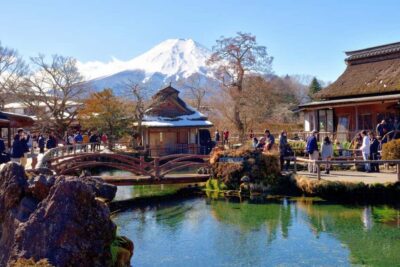
Mt. Fuji, Kamakura, Big Buddha, & Lake Ashi Day Trip
Read our review →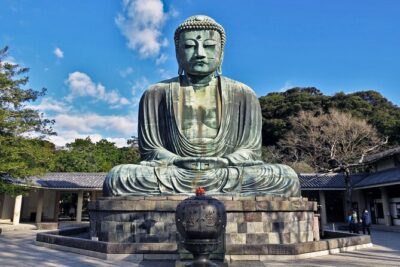
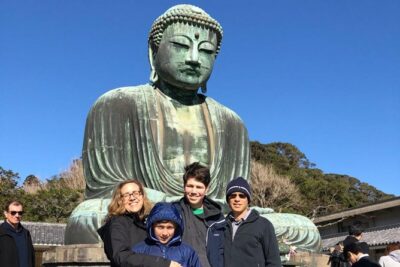
Kamakura Historical Walking Tour with the Great Buddha
Read our review →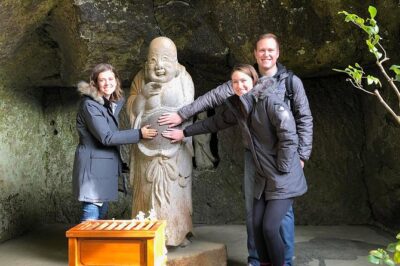
Kamakura Private Tour: Temples, Nature, and the Great Buddha
Read our review →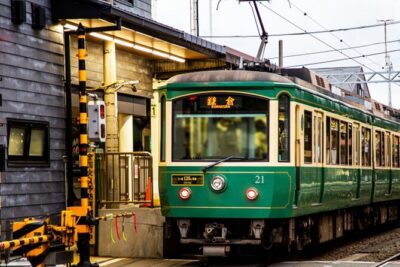
Sea of Mount Fuji, Hakone Ropeway, Ōwakudani, Enoshima
Read our review →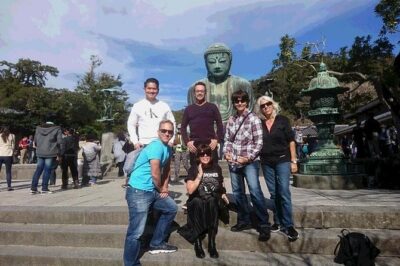
Kamakura 8 hr Private Walking Tour with Licensed Guide from Tokyo
Read our review →Browse the lists this tour appears in