
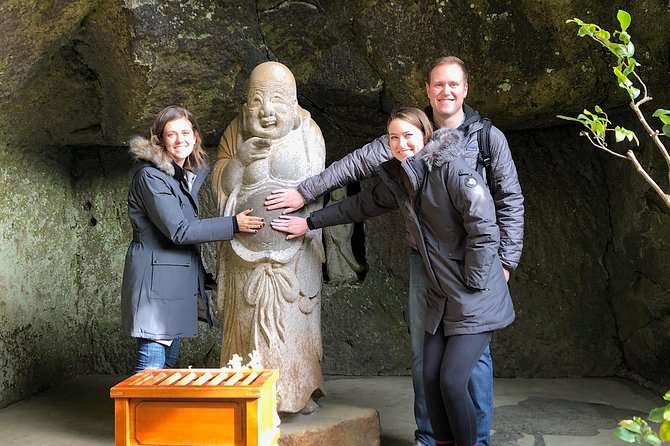
Reviewed · KAMAKURA TOURS
Kamakura Private Tour: Temples, Nature, and the Great Buddha
Kamakura’s appeal is the way its mountain paths connect quiet shrines with major sights. In five hours, you can walk from the wooded hills near Kita-Kamakura to the Great Buddha, then finish by the sea.
I like two things in particular: your private guide can adapt the pace and route, and admission is included at Jochiji, Kotoku-in and Hasedera. The main caution is the walking: expect at least five kilometres, including a hilly mountain pass, so this is a poor match for sore knees, limited stamina or very hot, wet weather.
- A hill walk links the stops: The route trades some easy city walking for forest paths and a mountain pass.
- Three temple admissions are covered: Jochiji, the Great Buddha at Kotoku-in and Hasedera are included.
- The shrines add variety: Zeniarai Benten and Sasuke Inari bring local legends and different spiritual traditions into the day.
- The finish is by the water: The walk ends at Yuigahama Beach, near Hase Station.
- It is private, not a shared group tour: Your guide can adjust the pace and, when needed, change the plan.
- Come ready to walk: The tour covers at least five kilometres, and comfortable shoes are essential.
From Kita-Kamakura into the wooded hills
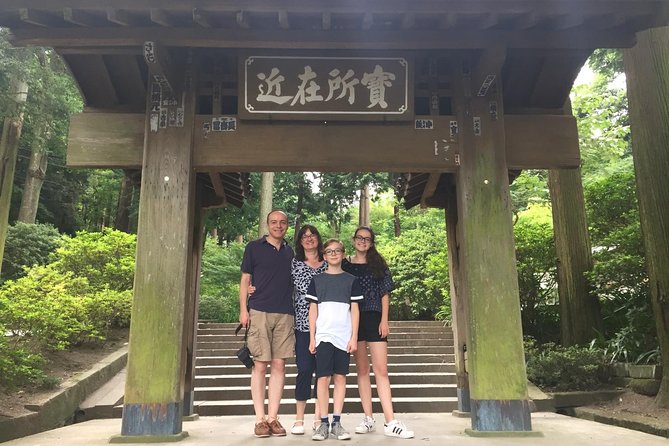
The meeting point is Kita-Kamakura Station, in the northern part of Kamakura. From there, the tour begins at Jochiji Temple, a Zen temple founded in 1281 in memory of a young son of Hojo Tokiyori, a leader of the Kamakura shogunate. Its forested setting gives you a quieter start than the famous sights later in the day.
You have about 25 minutes here. That is enough for a guided look around, though not a long, unhurried temple visit. Admission is included, so you need not stop to buy a ticket. Your guide can explain what you are seeing and how the temple fits into Kamakura’s religious and political past.
The next stretch is about 40 minutes on Kamakura’s hiking trails. This is the tour’s defining feature, and also the part that deserves the most honest thought before you book. You are not just walking between sights on paved streets. You will cross a mountain pass on a path through the hills, and the operator asks participants to be in moderate physical condition.
The payoff is a break from the town’s streets and a chance to see shrines and temples in their natural setting. But the route can feel strenuous, especially in heat or humidity. One day on the tour was reported to be 95°F (35°C), and the group needed more breaks than expected. Rain can also alter the walk: the guide may use trains or buses to reach sites, or skip slippery mountain sections.
Because this is a private tour, the pace can be adjusted to your group. That flexibility is valuable, but it does not turn a hilly hike into an easy stroll. If someone in your party has an injury or trouble with uphill walking, contact the operator before booking and ask what route changes are possible.
Zeniarai Benten and the shrine in the hillside
The Daibutsu Hiking Course leads to Zeniarai Benten Ugafuku Shrine. Its entrance is a striking change of scene: a torii gate frames a hole in the hillside, and the shrine sits beyond it. The name is associated with washing money, a ritual that gives this stop a distinctive character among Kamakura’s many religious sites.
You have about 25 minutes here, with no admission fee listed. Your guide can help explain the setting and customs, which is useful when a shrine’s meaning is not obvious from its architecture alone. A private guide is particularly handy on the less direct paths. Some visitors choose a guided walk because trails around town may not be easy to follow in English.
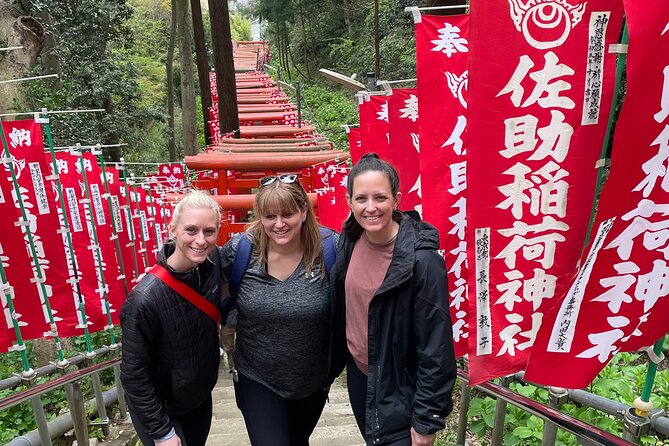
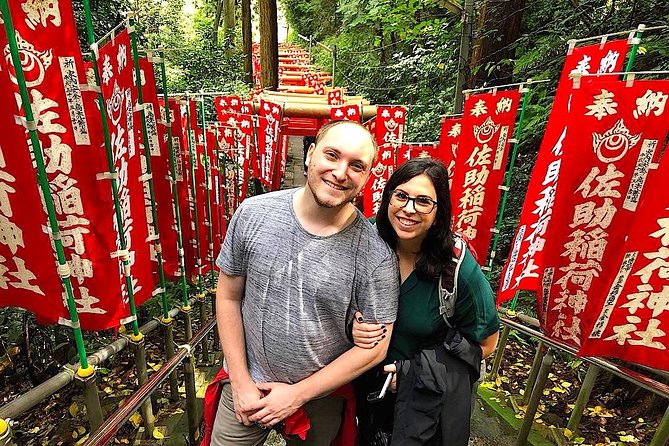
Next comes Sasuke Inari Shrine, reached after about 20 minutes of visiting time. Its story concerns Minamoto Yoritomo, Kamakura’s first shogun, who, according to legend, received advice in a dream from a white fox named Inari. The tale connects the shrine to the city’s warrior past, while its position along the hillside keeps the mood quieter than at the Great Buddha.
These two stops make the walk more than a checklist of famous landmarks. You get time for local stories and a sense of how Kamakura’s religious sites sit within the hills. The trade-off is that every additional stop uses time and energy. If the weather is poor or your group needs longer breaks, the guide may need to adjust the route.
More Kamakura trips in Kamakura:
- Tokyo: Kamakura & Enoshima Day Trip including Temple Tickets
★ 4.5 · 1,375 reviews - Tokyo: Mt. Fuji, Kamakura, Big Buddha, & Lake Ashi Day Trip
★ 4.5 · 867 reviews - From Tokyo: Kamakura & Enoshima 1-Day Bus Tour
★ 4.5 · 189 reviews
Meeting Kamakura’s Great Buddha
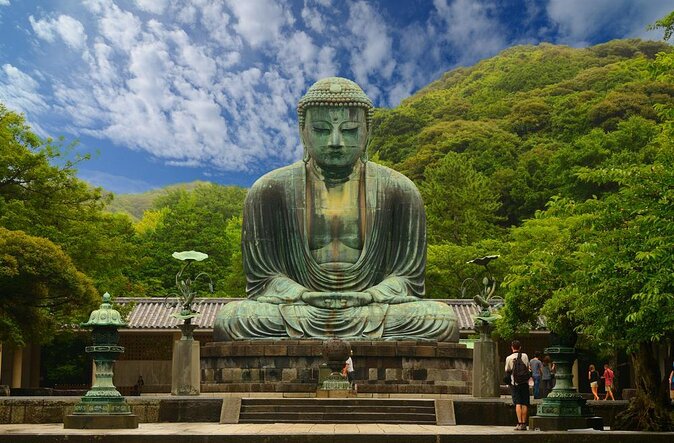
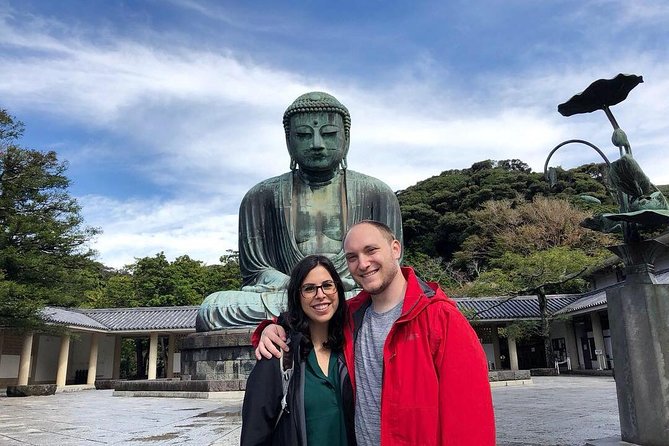
At Kotoku-in, you get about 20 minutes to see the Great Buddha, a bronze statue dating from 1252. It stands 13.35 metres tall and weighs about 121 tonnes. After the wooded trails and smaller shrines, the scale of the figure makes a clear impression.
Admission is included. The visit is fairly brief, so expect a focused stop rather than a long stretch to explore the grounds. The Great Buddha is one of Kamakura’s best-known sights and can be a busier contrast to the hillside shrines. Your guide’s context can help connect this major monument to the earlier, quieter parts of the day.
There is an important distinction between admission and access to every feature: the tour information includes the entrance fee, but does not promise that you will go inside the statue. If interior access matters to you, check what is available on your date rather than assuming it is part of the tour.
Hasedera’s gardens and ocean outlook
Hasedera sits partway up Mount Kamakura, and its position brings a different reward: views south toward the ocean and Yuigahama Beach. You have about 30 minutes here, with admission included. The temple is known for its gardens, and the grounds offer a calm counterpoint to the imposing Buddha.
June and July are noted for hydrangeas, so the season can change what you see in the gardens. That timing is a bonus, not a reason to expect the same flowers year-round. The temple’s elevated location also means there is some uphill movement, a detail worth keeping in mind if you are already feeling the trail.
The schedule gives Hasedera more time than most stops, but half an hour can still pass quickly. You may want to ask your guide how best to use the visit, especially if your priority is the outlook, the gardens or the temple itself. The private format helps here: the guide can take your interests into account, though the overall five-hour limit still applies.
Finishing at Yuigahama Beach

The final listed stop is Yuigahama Beach, with about 15 minutes to pause and take in the south-facing sea view. In summer, an open-air market called Umi-no-ie operates here. The beach offers a gentler end to a day of temple grounds and uphill walking, though the visit is brief rather than a long beach break.
The tour ends at Hase Station. The operator notes that the guide usually accompanies the group to Kamakura Station as well, which can help you get your bearings for the next leg of the day. Confirm your intended end point with the guide, particularly if you have onward plans.
More private tours in Kamakura:
- Kamakura 8 hr Private Walking Tour with Licensed Guide from Tokyo
★ 5.0 · 80 reviews - Kamakura Temples Private Guided Tour from Tokyo
★ 4.8 · 21 reviews - Kamakura and Enoshima: Private Guided Day Tour with Vehicle
★ 3.9 · 17 reviews - Kamakura Private Custom Tour with Local Guide
★ 5.0 · 7 reviews
What the private format is worth
The advertised price is $98.44 per person, and at least two people are required per booking. The tour is private, so only your party participates. That matters most if you want to ask questions, set a manageable pace or have the guide adapt explanations for children or different interests.
Past guides named by participants include Yu, Yumi, Teiko, Noriko, Yoko and Naho. The personal attention is a consistent strength of this format: guides have helped families, adjusted plans for older participants, explained Shinto and Buddhism, and arranged local lunch stops. Those examples show what a flexible guide can add, but they are not guaranteed services or a promise of a particular guide.
The tour also includes photos of participants, though the available information does not specify how or when those photos are delivered. Food and drink are not included. Some groups have had lunch with their guide, but that is an extra and should not be treated as part of the package.
Private transport is not included, and neither are hotel transfers. Hotel pickup can be arranged for an additional 8,000 yen per person. The tour may use public transport or taxis if weather or route conditions require a change; any fares or transport costs are not specified as included, so bring money for possible expenses.
You can extend the tour for 1,000 yen per person for each extra half-hour, payable in cash. That may be useful if you want a longer visit or your group needs more breaks, but confirm the arrangement with the operator or guide rather than counting on extra time being available automatically.
Who should book this Kamakura walk?
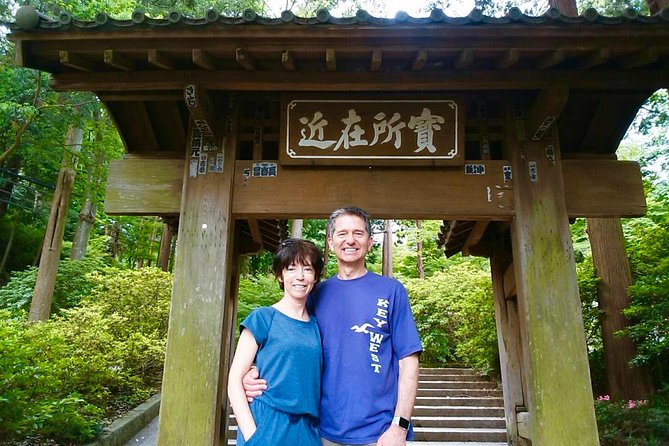
This tour suits you if you want to combine Kamakura’s headline monument with smaller shrines and temples, and you like the idea of reaching them on foot through the hills. It is also a good fit if historical and cultural explanation matters to you. A guide can explain the significance of sites and local customs that are easy to pass over when exploring alone.
Families can be a good match if everyone is comfortable walking. Guides have adapted explanations for children, and the private format makes it easier to respond to the needs of your own group. Still, the route is not a flat family stroll. Think carefully about the mountain pass, heat and anyone’s mobility before booking.
If you want a relaxed temple day with little walking, or you need a fully accessible route, this is not the safest choice based on the information available. Poor weather can change the plan, and rain may mean less trail time or the omission of slippery sections. The operator requires good weather for the experience and offers another date or a full refund if weather forces cancellation.
Should you book it?
Book this tour if you are fit enough for a hilly five-kilometre walk and want Kamakura to feel like more than a stop at the Great Buddha. The combination of forest trails, lesser-known shrines, Hasedera’s ocean outlook and a beach finish gives the day a satisfying range.
Skip it, or ask about a modified route, if steep walking is a concern or you need a predictable, low-effort day. The price makes good sense for a private guide and three included admissions, especially if your group values personal explanations and flexibility. It is less compelling if you mainly want transportation between the major sights or prefer to explore at your own pace without a guide.
FAQ
How long is the tour?
It lasts about five hours. The listed visits total less time, with the balance used for walking between stops and moving through the route.
Where does the tour start and end?
It starts at Kita-Kamakura Station and ends at Hase Station. The guide usually accompanies the group to Kamakura Station.
How much walking should I expect?
At least five kilometres, including a mountain pass. Comfortable walking shoes are recommended, and participants should have moderate physical fitness.
Which admission fees are included?
Admission is included for Jochiji Temple, Kotoku-in, home of the Great Buddha, and Hasedera Temple.
Is this a shared group tour?
No. It is a private activity, so only your booking group participates. A minimum of two people per booking is required.
Are food and drinks included?
No. Food and drinks are not included in the tour price.
Can I arrange hotel pickup?
Yes. Hotel pickup is available for an extra 8,000 yen per person. Hotel drop-off and private transport are not included in the base tour price.
What happens if bad weather affects the tour?
The tour requires good weather. If it is canceled because of poor weather, you will be offered another date or a full refund. Rain may also lead the guide to change the route.
Freshly reviewed in Kamakura
- Tokyo Yokohama Night View Tour With Kamakura And Enoshima★ 3.5 · 14 reviews
- Tokyo: Kamakura & Enoshima Day Tour with Pickup & Train Ride★ 4.1 · 61 reviews
- Tokyo: Kamakura Private Tour With Guide★ 5.0 · 5 reviews
- Tokyo: Day Trip to Kamakura in Spanish – Spanish★ 4.9 · 22 reviews
- Kanagawa: Kimono Rental in Kamakura Provided by RikaWafuku★ 4.8 · 8 reviews
- Private 2-Day Tour: Mt Fuji Hakone & Kamakura + Onsen Ryokan★ 5.0 · 3 reviews
- Kamakura: Great Buddha, Hase Temple, & Komachi Street Tour★ 5.0 · 11 reviews
- Mt Fuji Hakone/Enoshima Tour:Optional Ropeway/Lake Ashi Boat★ 4.3 · 49 reviews
Kamakura Tours, compared.
Kamakura & Enoshima Day Trip including Temple Tickets
Read our review →
Mt. Fuji, Kamakura, Big Buddha, & Lake Ashi Day Trip
Read our review →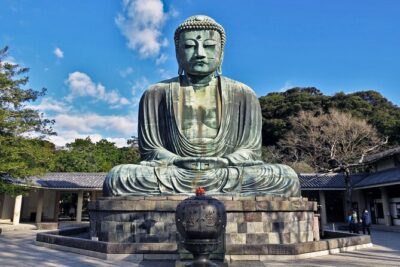
Kamakura Historical Walking Tour with the Great Buddha
Read our review →
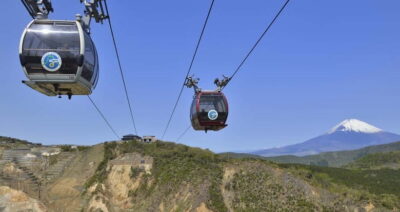
Sea of Mount Fuji, Hakone Ropeway, Ōwakudani, Enoshima
Read our review →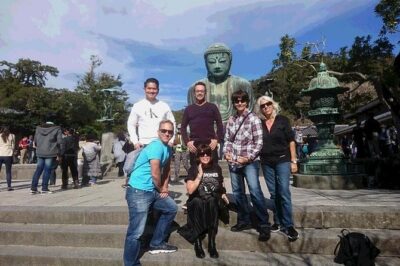
Kamakura 8 hr Private Walking Tour with Licensed Guide from Tokyo
Read our review →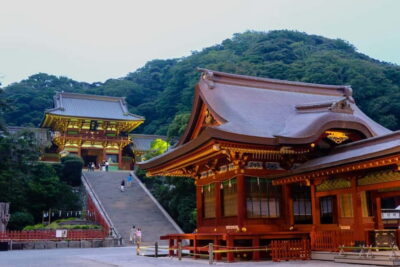
Kamakura & Enoshima Day Tour with Pickup & Train Ride
Read our review →Browse the lists this tour appears in